As modern manufacturing facilities, utilities, and infrastructure nodes transition to interconnected ecosystems, Remote Asset Management (RAM) has emerged as the structural foundation of operational excellence. Globally, industries are losing billions of dollars annually due to unplanned downtime, legacy PLC failures, and unmonitored thermal stresses in critical mechanical processes. Remote Asset Management systems bypass traditional localized isolation barriers by leveraging IoT gateways, smart VFDs (Variable Frequency Drives), predictive edge compute units, and cloud analytics platforms to provide real-time diagnostic transparency.
By shifting operational paradigms from reactive correction to prescriptive digital twins, industrial enterprises can anticipate critical equipment failure weeks before visual indicators manifest. Shenzhen Eeptron PLC Co., Ltd. serves as a primary exporter and innovation source of these highly technical replacement components, specialized PLCs, and network-integrated sub-systems, bridging the gap between legacy manufacturing baselines and cloud-level SCADA architectures.
Real-time edge polling rates of millisecond intervals allow the capture of transient power spikes, subtle VFD anomalies, and thermal fluctuations before they compound into mechanical failures.
Native hardware bridges that translate older Modicon Modbus, PROFIBUS, and early Ethernet IP variants into structured JSON, MQTT, or OPC UA telemetry payloads for direct cloud routing.
Synchronized thermodynamic and mechanical simulation layers, allowing physical heat exchangers and multi-axis CNC assemblies to generate operational virtual duplicates.
The operational landscape of remote industrial management differs significantly by geographical zone, driven by infrastructural history, local grid patterns, and regional green initiative directives:
| Region | Primary Regulatory Driver | Predominant RAM Deployment Architecture | Key Challenges Addressed |
|---|---|---|---|
| North America | NIST SP 800-82 Cyber Security, EPA Environmental Regulations | Edge-Heavy Processing with Secure VPN Tunnels & AWS/Azure Hybrid Cloud | Legacy Grid Consolidation, Obsolete PLC Migration, Cyber Threats |
| European Union | EU Green Deal, RED II, NIS2 Directive | Highly Secure OPC UA Unified Architectures with Local Sovereignty Controls | Thermodynamic Efficiency Tracking, Carbon Footprint Accounting |
| Middle East | National Infrastructure Resiliency Initiatives | Sub-sea / Desert Optical Fiber Nodes with Solar-Powered Telemetry Centers | Severe Thermal Conditions, Remote Petrochemical Pipelines Monitoring |
| Asia-Pacific | Smart Manufacturing Policies (Made in China 2025, Society 5.0) | High-Density 5G Private Networks Connected to Edge Computing Nodes | Mass Scale Asset Synchronization, Ultra-Low Latency Motor Tuning |
To succeed globally as an exporter, Shenzhen Eeptron PLC Co., Ltd. has structured its entire supply logic to conform directly to these regional criteria. Our hardware integrations, such as the digital-twin-ready automatic keel machines and variable-frequency speed controls, undergo rigorous testing. From voltage adaptations for European 400V grids to specialized components compliant with North American CSA standards, we ensure that every remote management deployment functions smoothly in its target geography.
A primary bottleneck in modernizing infrastructure is the coexistence of multi-generational industrial hardware. Many process manufacturing plants depend on classic programmable logic controllers (such as the Modicon TSX series, Siemens S7 legacy networks, or older Allen-Bradley components) that are no longer officially supported by their original equipment manufacturers (OEMs). Upgrading a complete production line because of one failed monitoring interface card is financially prohibitive.
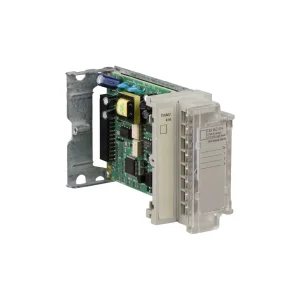
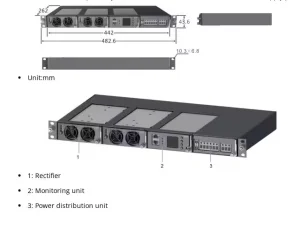
This is where Shenzhen Eeptron PLC Co., Ltd. establishes its unique E-E-A-T (Experience, Expertise, Authoritativeness, and Trustworthiness). By maintaining a massive inventory of hard-to-find, obsolete, and discontinued automation components, we act as a global logistics lifeline. Every component, whether a brand new Modicon TSXAEZ414 motor control card or an industrial Zxdu48 DC rectifier module, undergoes a rigorous testing regimen in our facility to guarantee its performance parameters match or exceed original specifications. This reliable performance is why we confidently support our products with an industry-leading 24-month comprehensive warranty.

Figure 1: Eeptron's State-of-the-Art Diagnostics Lab, ensuring quality control on legacy PLC modules.
Furthermore, Eeptron’s sophisticated international distribution system bypasses long lead times. Leveraging air freight networks, we offer next-day air delivery services to major hubs across Europe, the United States, and the Middle East, minimizing production downtime. Our technical engineers possess deep domain knowledge of obsolete PLC systems, enabling us to provide integration advice for connecting legacy architectures with modern IoT platforms.
Developing an effective remote asset management strategy requires a layered, standardized network architecture. The diagrammed process below explains how raw physical signals are converted into high-level business intelligence:
Physical telemetry collection utilizing RTDs, piezoresistive vibration sensors, and inductive tachometers. These sensors connect to the core machine controls, like the VFD frequency converter or the smart hydraulic pressure valves, monitoring local variables in real-time.
PLCs collect sensor feeds and translate serial protocols (e.g., Modbus RTU, Profibus) into industrial Ethernet standards (PROFINET, Ethernet/IP, Modbus TCP). Edge gateways then encapsulate these streams into secure, compressed packets.
Cloud systems ingest the remote data streams and compare them against historical models. Machine learning algorithms flag anomalies, calculating remaining useful life (RUL) and recommending maintenance schedules before failures occur.
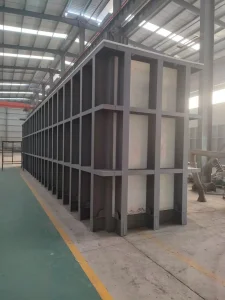
For example, in a heat exchanger digital twin deployment, temperature transmitters and flow meters output continuous values to a Modicon PLC. Our integrated analytics system calculates thermal degradation patterns and warns operators if tube scaling is impacting heat transfer efficiency, helping avoid emergency shutdowns.
In large-scale solar installations, managing scattered inverters, trackers, and weather monitoring units presents unique operational challenges. Our advanced SCADA solutions resolve this issues by integrating remote terminal units (RTUs) across expansive fields. The system aggregates string-level performance, tracking energy yield anomalies down to individual panels. If an inverter thermal profile rises unexpectedly, remote diagnostics help operators isolate the unit and configure alternative circuits to maintain optimal grid export.
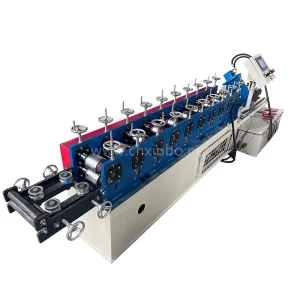
In structural steel fabrication and automatic light keel forming, precision is critical. Modern roll-forming machines require real-time tracking of thickness variation, hydraulic oil pressure, and motor torque loads. By deploying high-performance variable frequency drives paired with IoT feedback loops, operators can adjust motor speeds to compensate for material thickness variations. This minimizes tool wear and ensures precise manufacturing tolerances.

Figure 2: Eeptron's fully-stocked global distribution warehouse in Shenzhen, holding over 100,000 legacy and modern components.
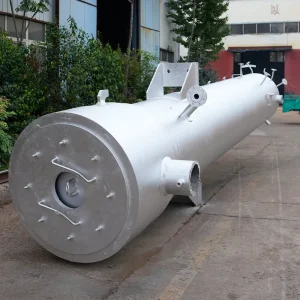
Industrial heat exchangers are vulnerable to fouling and mechanical vibrations. Deploying digital twins with predictive maintenance packages allows operators to continuously monitor pressure drop coefficients and thermal efficiency. The system flags early-stage mineral deposits or tube blockages, prompting targeted maintenance intervals. This replaces fixed calendar maintenance, extending asset service life and lowering energy consumption.
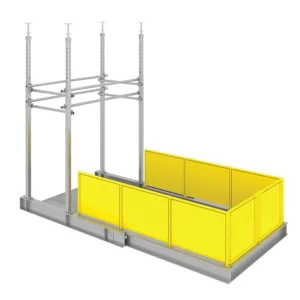
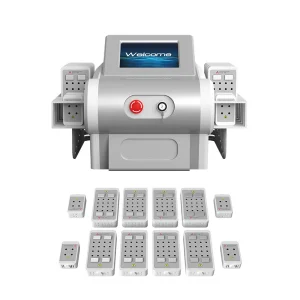
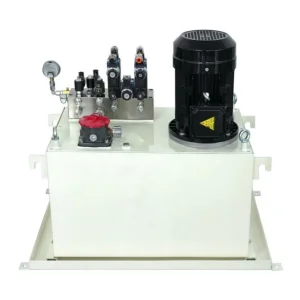
Eeptron specialized PLC modules and interface components support older communications protocols (such as Modbus serial or Profibus) and convert them to modern industrial Ethernet payloads. This lets you connect older machinery directly to IoT gateways, SCADA programs, or cloud-based predictive maintenance systems without needing a complete equipment overhaul.
All discontinued components, legacy controllers, and system modules undergo a strict testing procedure at our facility. Our engineers test insulation resistance, loop integrity, signal quality, and thermal behavior under simulated loads. We back this inspection program with a comprehensive 24-month warranty.
We work with international logistics providers to support emergency maintenance needs, offering next-day air delivery to Europe, North America, the Middle East, and other regions. This service helps keep downtime minimal and production running smoothly.
Digital twin integration creates a virtual representation of your physical systems (like a heat exchanger or motor drive). By matching live telemetry with a simulated baseline model, you can detect minor deviations in temperature, pressure, or vibration, helping identify potential component wear before a failure occurs.
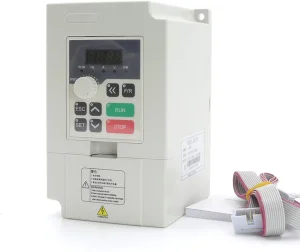
A Variable Frequency Drive (VFD) regulates motor speed to match real-time system demand, avoiding excessive power draw. In remote setups, VFDs also monitor torque, current draws, and thermal parameters, providing early warnings if a pump or motor begins to jam or wear down.
 Eeptron PLC