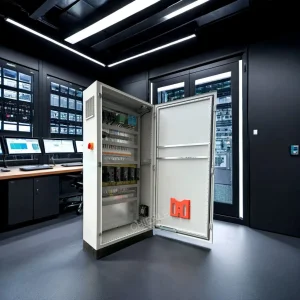
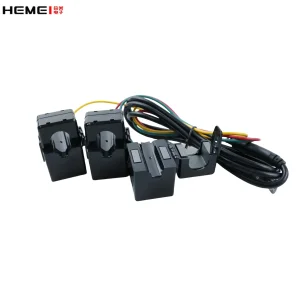
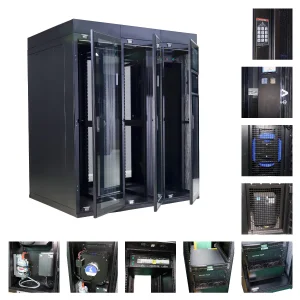
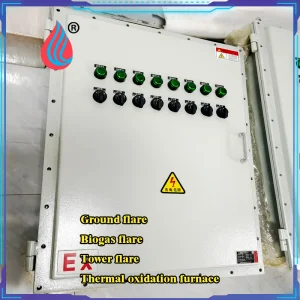
Sensor-to-dashboard hardware engineered in Shenzhen, certified for global deployment, and shipped with a 24-month warranty — built for plant managers, system integrators and industrial distributors who cannot afford a silent failure.
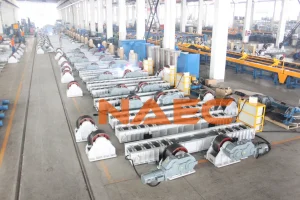
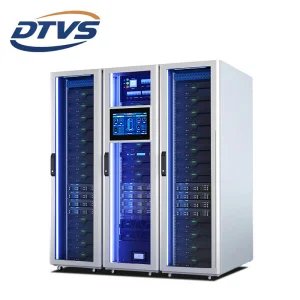
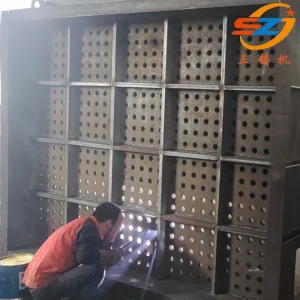
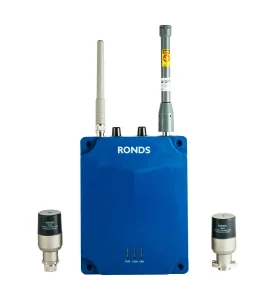
Eight representative platforms from our monitoring and control portfolio — each one available for firmware customisation, enclosure re-branding, protocol adaptation and volume OEM supply.
A real-time monitoring solution is an integrated stack of sensing hardware, acquisition electronics, embedded firmware and communication pathways that continuously converts physical process data into decisions a plant can act on within milliseconds — not at the end of a shift.
Search interest in real-time monitoring solutions has shifted dramatically over the past five years. Buyers are no longer asking whether continuous telemetry is useful; they are asking who can engineer it into a form factor that survives their specific environment, integrate it with their existing SCADA and MES layers, and ship it under their own brand. That shift is precisely where a custom OEM supplier earns its place in the value chain — and where a catalogue-only distributor usually falls short.
In practice, an industrial monitoring system is composed of four cooperating layers. When a sourcing team evaluates a supplier, it is worth checking which of these four the supplier genuinely controls versus which it merely resells.
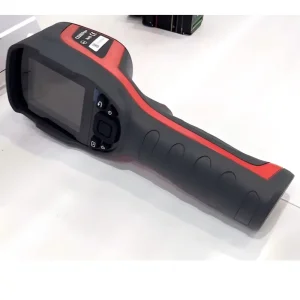
Hall-effect current transmitters, thermal imaging modules, piezoelectric and MEMS vibration sensors, pressure and flow transducers. Measurement quality here determines the ceiling of everything above it — a 0–300AC current sensor with a weak linearity budget will corrupt every downstream analytic.
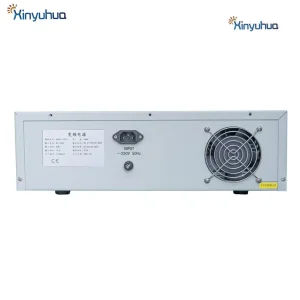
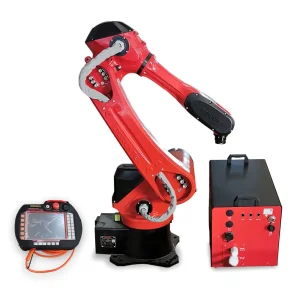
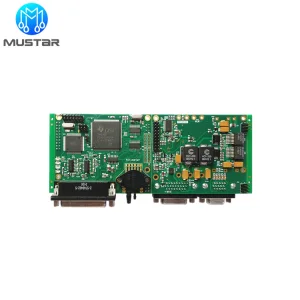
PLC control cabinets, impedance-controlled PCBA assemblies, industrial I/O modules and intelligent control systems that perform safety interlocks and automated production sequencing.
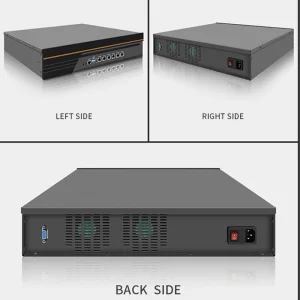
CANopen-capable gateways, multi-LAN industrial computers, 4G backhaul and edge data centre infrastructure that localise inference and reduce round-trip latency.
SCADA dashboards, predictive maintenance workflows and digital twin models that let engineers simulate a change before committing it to a live line.
The word “Custom” in a custom OEM contract is broader than most first-time buyers expect. It typically covers connector type and pin-out, housing material and ingress protection, firmware user interface language, protocol dialect, LED and alarm behaviour, regulatory marking, retail packaging and the entire documentation package. The word “Exporter” carries its own weight: HS classification, commercial invoice and packing list accuracy, CE or FCC Declaration of Conformity ownership, ISPM-15 compliant wood packaging, and Incoterms that match how the customer's freight forwarder actually operates. A supplier who does one without the other creates avoidable friction at the customs border.
The binding constraint on a monitoring project is rarely the concept. It is the speed at which the concept can become a certified, reproducible, exportable product. Six structural advantages explain why Chinese OEM factories keep winning that race.
Bare PCB fabrication, SMT assembly, aluminium extrusion, injection moulding, cable harnessing and enclosure machining often sit within a two-hour drive of each other in the Pearl River Delta and Yangtze River Delta clusters. An engineering change can therefore propagate through the entire bill of materials in days rather than in fiscal quarters.
Specialist prototype houses can deliver a first-article plus functional sample well inside the window that traditional Western supply chains need just to schedule a design review. For buyers working against a tender submission date, this compression of the new-product-introduction cycle is a competitive weapon, not a convenience.
Firmware, EMC pre-compliance and thermal simulation talent is concentrated rather than scattered. Many teams have spent a decade serving European and North American OEMs, which means design-for-manufacturability reviews happen at schematic stage instead of after the first failed pilot run.
Mid-sized Chinese factories routinely run low-volume customised builds alongside high-volume standard builds on the same line. For a customer validating a new monitoring concept with fifty units before committing to five thousand, that elasticity removes an otherwise fatal barrier to entry.
CE, UKCA, FCC, RoHS, REACH, UL and IECEx pathways are familiar territory. Experienced exporters maintain working relationships with third-party laboratories and understand exactly which test report a customs officer or a notified body will demand — a detail that frequently decides whether a shipment clears.
The advantage is not a lower headline price. It is the ability to reallocate the same budget toward wider operating temperature range, better surge protection, conformal coating or redundant communication paths — the attributes that decide whether a monitoring system survives year three in the field.
Buyers who lock a five-year supply agreement today are effectively betting on which architectural choices will still be defensible in 2030. These are the shifts our engineers and our customers are acting on now.
Inference is migrating from the cloud into the gateway. Running anomaly detection on a multi-LAN industrial computer at the cabinet level slashes bandwidth cost and removes the latency that makes real-time alarms feel theoretical.
Online wireless monitoring systems are now mainstream for rotating assets. Battery-powered sensors on bearings and gearboxes deliver continuous trend data that wired installations could never justify on cost grounds.
Digital twin models have moved from pilot projects into production lines, where they are used to simulate set-point changes and to schedule maintenance against predicted rather than elapsed operating hours.
Telemetry crossing from the plant floor into enterprise systems introduces genuine attack surface. Secure boot, signed firmware updates and zone-and-conduit segmentation are appearing in RFQs as hard requirements rather than nice-to-haves.
Variable speed drives and current transmitters are increasingly specified as energy metering instruments. The same Hall sensor that protects a motor can produce the kWh data that feeds a corporate ESG report.
OEM buyers want a platform they can differentiate at the firmware and enclosure layer without paying for a full ground-up design. Modular PCBA and cabinet architectures are the commercial answer to that demand.
Time-sensitive networking and industrial 5G are moving from demonstration to specification. Where control loops must be guaranteed, the network is now part of the monitoring solution rather than an afterthought.
Suppliers are being asked to guarantee availability, not just deliver boxes. That contractual shift rewards manufacturers who control their own firmware roadmap and can support a device across a ten-year lifecycle.
A monitoring architecture that performs beautifully in a clean semiconductor fab can fail within weeks in a foundry. The differences are environmental, not theoretical — and they should drive the specification.
Machine-state telemetry, cycle-time capture and OEE dashboards built around PLC control cabinets and edge gateways, giving line supervisors a live view of constraint stations instead of yesterday's report.
Corrosion-resistant enclosures, isolated signal conditioning and intrinsically safe measurement paths for continuous processes where a drift of half a percent is a quality incident.
Hall current transmitters, variable speed drives and power-quality logging deployed across substations and motor control centres where the monitoring layer must itself be immune to the disturbances it measures.
Energy-saving data centre platforms and edge load-balancing infrastructure monitored at the rack level, where thermal excursions are measured in seconds and downtime cost is measured in thousands per minute.
Vibration, dust and radiant heat define this environment. Inert vibrating shakeout systems and ruggedised sensing electronics must tolerate shock loads that would destroy a general-purpose controller.
Distributed pumping stations, dosing control and remote telemetry over cellular links, engineered for unmanned sites where the monitoring system is the only witness to an event.
The same monitoring platform shipped to Rotterdam, Riyadh and Ho Chi Minh City will face three different failure modes. Localisation is an engineering discipline, not a translation task.
CE and UKCA conformity, Low Voltage and EMC Directive alignment, compact cabinet footprints for space-constrained retrofit projects, and operator interfaces delivered in the local language of each plant.
UL and NRTL recognition, NEC-compliant installation practice, 120/240 V supply configurations and bilingual labelling — plus documentation that satisfies a corporate insurance underwriter, not only a maintenance technician.
Ambient temperatures above 50 °C, abrasive dust and coastal salt spray. Wide-input power stages, sun-shielded enclosures and derated component selection keep readings stable through the summer peak.
Persistent humidity demands conformal coating and anti-condensation design. IP66 sealing and generous creepage distances protect against the condensation cycles that follow every tropical downpour.
Voltage fluctuation tolerance, Spanish and Portuguese interfaces, and cellular-first connectivity for remote sites where wired infrastructure is unavailable or unreliable.
Solar and off-grid power architectures, low-bandwidth telemetry payloads, and mechanical robustness for sites where a service visit may be measured in days of travel rather than hours.
Each regional configuration is validated against an environmental profile before shipment — temperature cycling, humidity soak and vibration sweep are run on representative units, not on paper.
Sophisticated buying organisations have moved past price comparison. Their scorecards reward verifiable process, documentation depth and lifecycle commitment — three things that are difficult to fake and easy to audit.
Total cost of ownership. Purchase price is one line item. Freight, duty, commissioning, calibration intervals and spare-part logistics usually dominate the five-year figure.
Certification evidence. Declarations of Conformity, accredited test reports and traceable report numbers, not a logo printed on a brochure page.
Documentation depth. Datasheets, register maps, API references, wiring diagrams and a firmware changelog. Integration teams judge suppliers on this within the first week.
Spare-part and obsolescence policy. A documented end-of-life notice period and last-time-buy window protect the buyer from an unplanned redesign.
Supply-risk de-concentration. Dual-source plans for critical ICs, disclosed second-tier suppliers and buffer inventory for long-lead components.
ESG and due diligence. Conflict-mineral statements, RoHS and REACH declarations, and labour-practice transparency increasingly sit inside the standard supplier questionnaire.
Data sovereignty. Where telemetry is stored, which jurisdiction governs it, and whether the device can operate fully in an air-gapped plant network.
Incoterms and delivery reliability. Whether the supplier genuinely understands EXW, FOB and DDP, and whether it can hit a year-end shipping window without last-minute surprises.
Reliability validation method. Evidence of burn-in testing, HALT results and accelerated life testing rather than an assertion that the product is "industrial grade".
Experience, expertise, authoritativeness and trustworthiness are not abstract marketing concepts. In industrial sourcing they translate into traceable records, documented procedures and a paper trail that survives an audit.
Every unit ships with a two-year warranty, a commitment that only makes commercial sense when incoming inspection, in-process control and outgoing burn-in testing are genuinely enforced.
Component verification on receipt, automated optical inspection after SMT, functional test at board level and full-system burn-in before packing — each stage generating a record linked to the serial number.
Serial-level traceability ties a delivered unit back to its component lot, its test log and its operator. When an intermittent fault appears eighteen months later, traceability turns a guess into a diagnosis.
A structured RMA process with failure analysis feedback closes the loop between field performance and design revision — the mechanism by which a product actually improves across generations.
Shenzhen Eeptron PLC Co., Ltd. was established with the mission of providing high-quality industrial automation replacement parts to customers worldwide. From the beginning, the company has been committed to delivering above-standard products and reliable services at competitive and fair prices. To ensure customer confidence, all products are backed by a 24-month warranty. Supported by an experienced and professional team, Eeptron consistently delivers dependable solutions that meet the demands of modern industry.

The company serves clients across Europe, the United States, the Middle East, and many other regions, offering flexible and fast shipping options, including next-day air delivery for urgent requirements. This efficient logistics network enables customers to minimize downtime and maintain smooth operations.
Shenzhen Eeptron PLC Co., Ltd. specializes in supplying a wide range of industrial automation equipment, with a particular focus on hard-to-find, discontinued, and obsolete parts. By maintaining strong sourcing capabilities and strict quality control standards, the company ensures that every component meets performance expectations.

Eeptron is dedicated to creating a seamless and hassle-free purchasing experience. Through continuous improvement, customer-centric service,
the company pairs responsive engineering support with transparent order tracking and long-term supply guarantees. For buyers of real-time monitoring hardware, that combination matters: an obsolete sensing module discovered on a Friday afternoon should not become a three-week production stoppage. The sourcing network, the warranty structure and the air-freight capability exist so that it does not.
A practical screening framework for procurement and engineering teams, distilled from real evaluation cycles rather than generic sourcing advice.
Ask who controls the firmware. If the supplier resells someone else's board, your customisation roadmap belongs to a third party.
Request a real register map. A supplier who cannot produce a Modbus or CAN register table within a day has never integrated their own product.
Verify the warranty in writing. Confirm exactly what the 24-month warranty covers and which party pays return freight.
Demand sample-unit test reports. Burn-in logs and functional test records for the specific units you receive, not a generic certificate.
Check environmental ratings against your site. An IP20 enclosure specified for a wash-down area is a planning error, not a manufacturing defect.
Confirm the export paperwork owner. Clarify in advance who issues the Declaration of Conformity and who absorbs customs delays.
Test the response time before you buy. Send a technical question during your evaluation. The reply speed you experience now is the support speed you will receive later.
Ask about the obsolescence horizon. How long will this platform be supported, and what is the last-time-buy notice period?
Request references in your region. A supplier with installations in your climate and regulatory environment has already solved problems you are about to encounter.
Model the five-year cost. Include spares, calibration, freight and redesign risk — then compare that figure, not the unit price.
An off-the-shelf device is designed against a statistical assumption about its average user. A custom OEM solution is designed against a specification written for one buyer: your connector type, your enclosure material, your protocol dialect, your alarm logic, your branding and your regulatory marking. The commercial consequence is that the buyer owns a differentiated product rather than competing on the same catalogue item as every other distributor in the region.
Yes. Typical customisation scopes include firmware interface language, sample rates, alarm thresholds and reporting logic; protocol adaptation across Modbus RTU/TCP, CANopen, Profinet and MQTT; enclosure dimensions, material and ingress protection; connector and terminal selection; and full retail packaging under the customer's brand. The cleanest projects start with a written interface control document so that both parties are engineering against the same definition.
Standard catalogue items can typically ship within days, which is why urgent replacement parts are offered with next-day air delivery. A genuine custom build is a different timeline: sample iteration, validation testing, certification if required, and then volume production. Buyers should plan on a multi-stage schedule and insist on a milestone plan rather than a single promised date.
CE and UKCA conformity for European markets, FCC for the United States, RoHS and REACH for substance compliance, and UL or NRTL recognition where North American installation practice requires it. Hazardous-area deployments may require ATEX or IECEx assessment. Which certificates apply depends on the destination market and on whether the device is mains-powered or loop-powered, so the certification plan should be agreed before the design freezes.
Every supplied product is backed by a 24-month warranty against manufacturing defects. Component-level failures attributable to workmanship, assembly or material are covered; damage caused by incorrect installation, over-voltage events or unauthorised modification falls outside scope. Buyers should confirm the RMA logistics and return-freight responsibility in the purchase agreement so there is no ambiguity at the moment of a claim.
Shipments are prepared with accurate HS classification, commercial invoices and packing lists, ISPM-15 compliant wood packaging where applicable, and Incoterms agreed at quotation stage. For urgent requirements, next-day air delivery reduces downtime to a single working day. The objective is straightforward: a replacement monitoring module should never be the reason a production line stays stopped.
Eight further platforms from the same portfolio — wireless condition monitoring, PLC control cabinets, current transmitters, edge data centres and intelligent control systems, all available for OEM customisation.
 Eeptron PLC