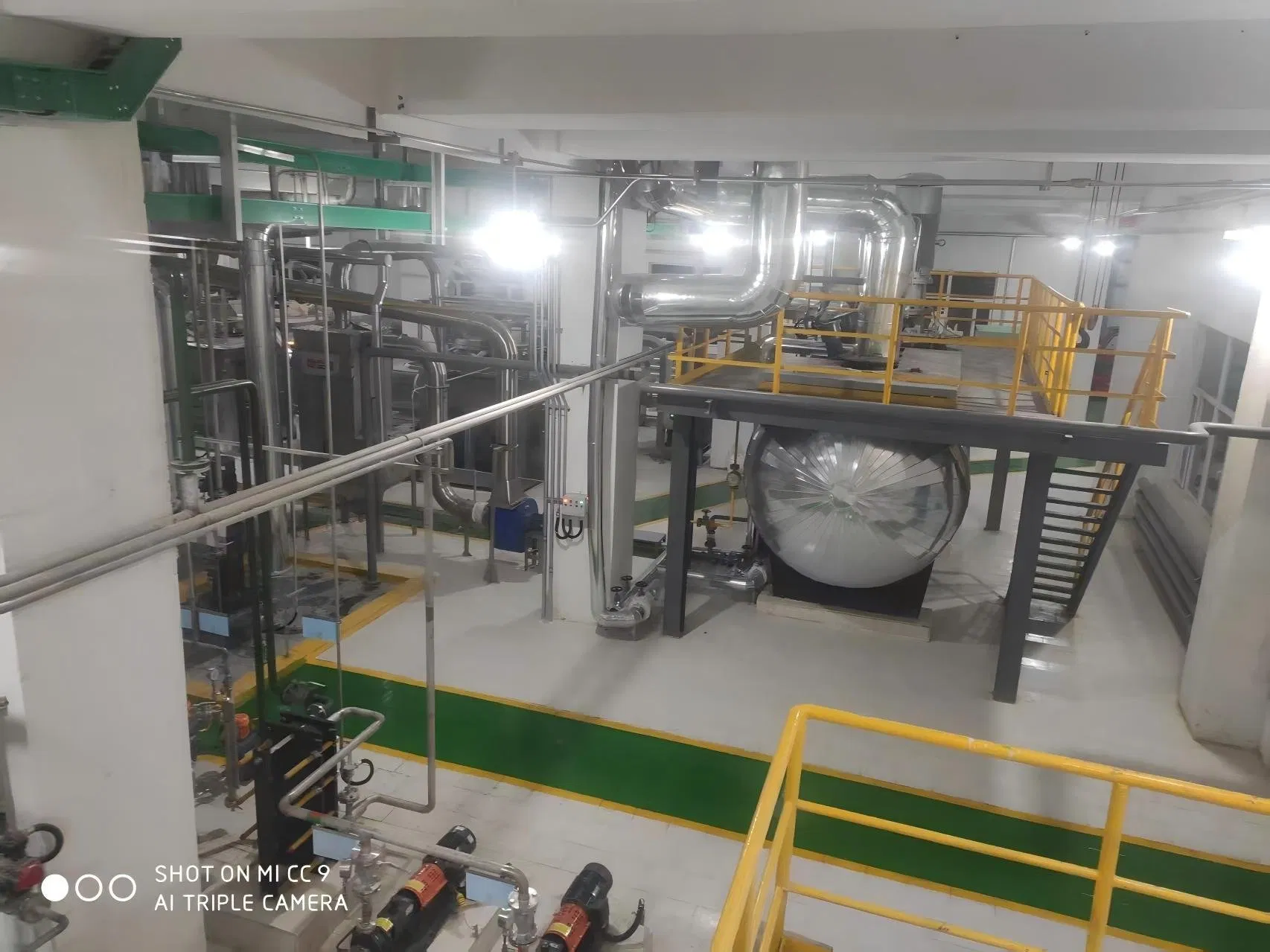
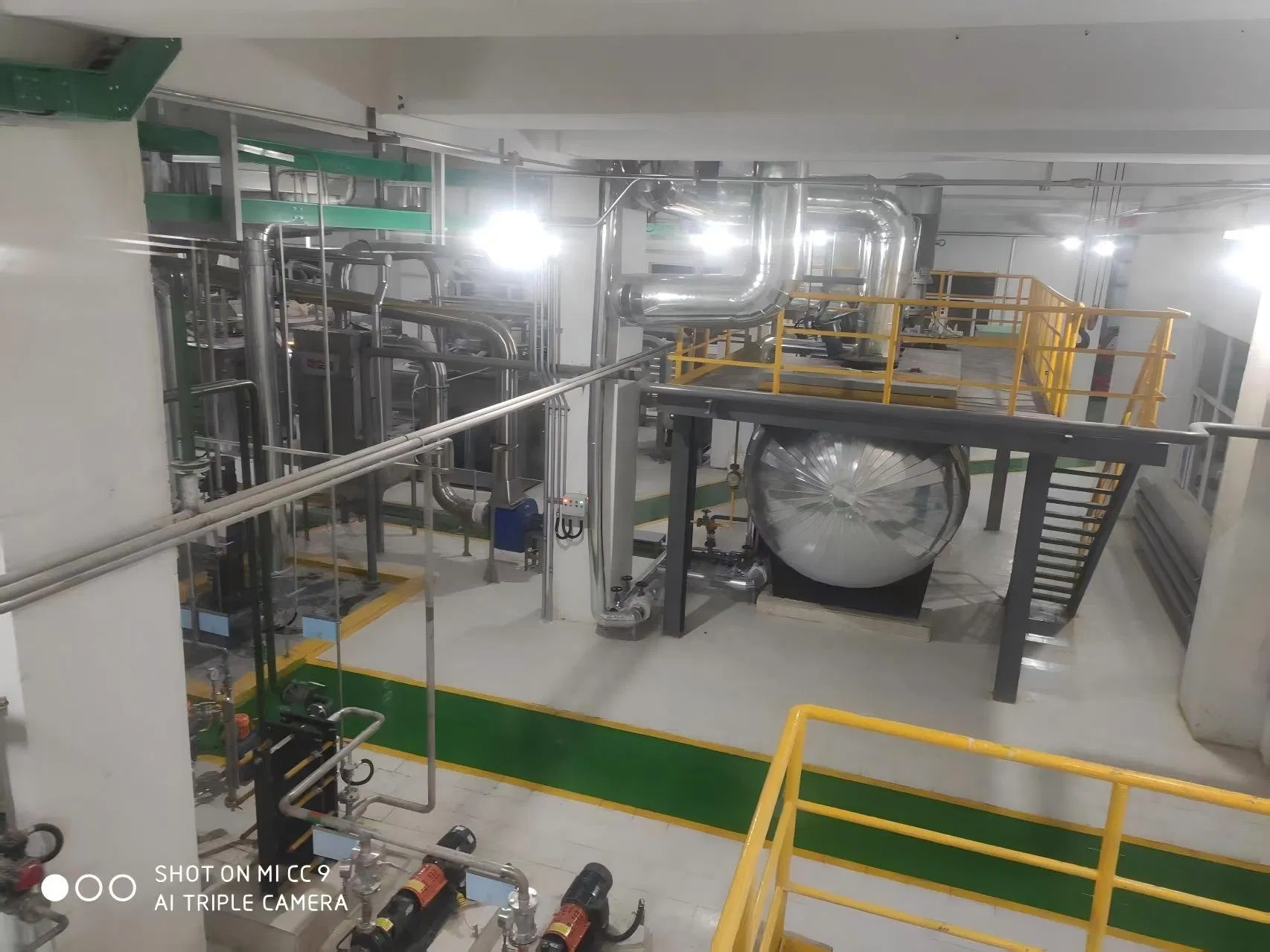
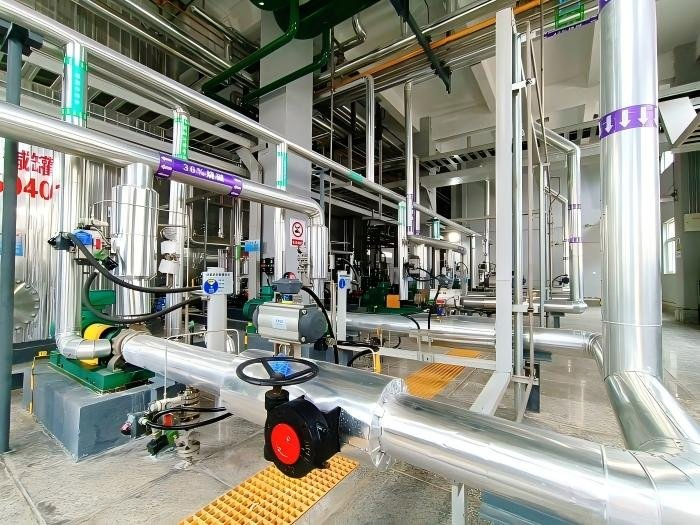
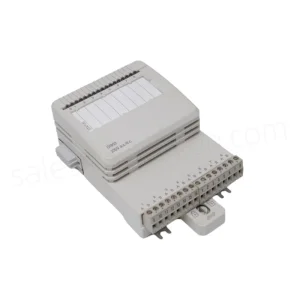
3+2 Effect Evaporator System for 99% Caustic Soda Flakes Production

After-sales Service: Supplier Send Engineer for Installation
Warranty: 2 Years
Certification: ISO9001, CE

Product Description

i

Basic Information

Model NO.:
CMS
Application:
Industry
Voltage:
380V
Disinfection:
Chlorine Dioxide
15% Naclo Production:
1 Tpd
Raw Material:
Brine, Electricity
Output:
Chlorine Gas, Caustic Soda(NaOH)
Operating:
Fully Automatic
Transport Package:
Container
Origin:
China
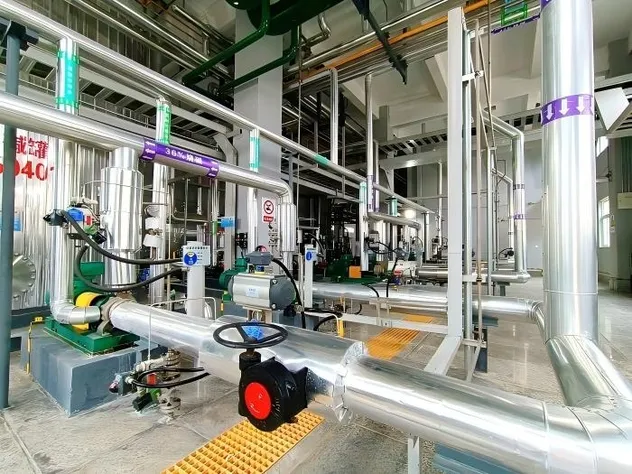
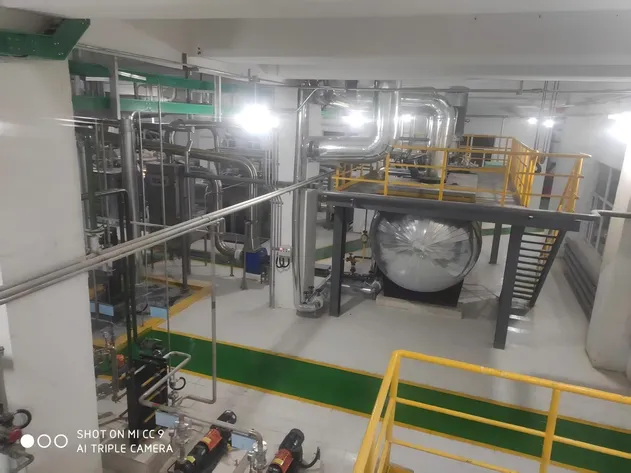
Evaporator System 1
Evaporator System 2
Evaporator System 3
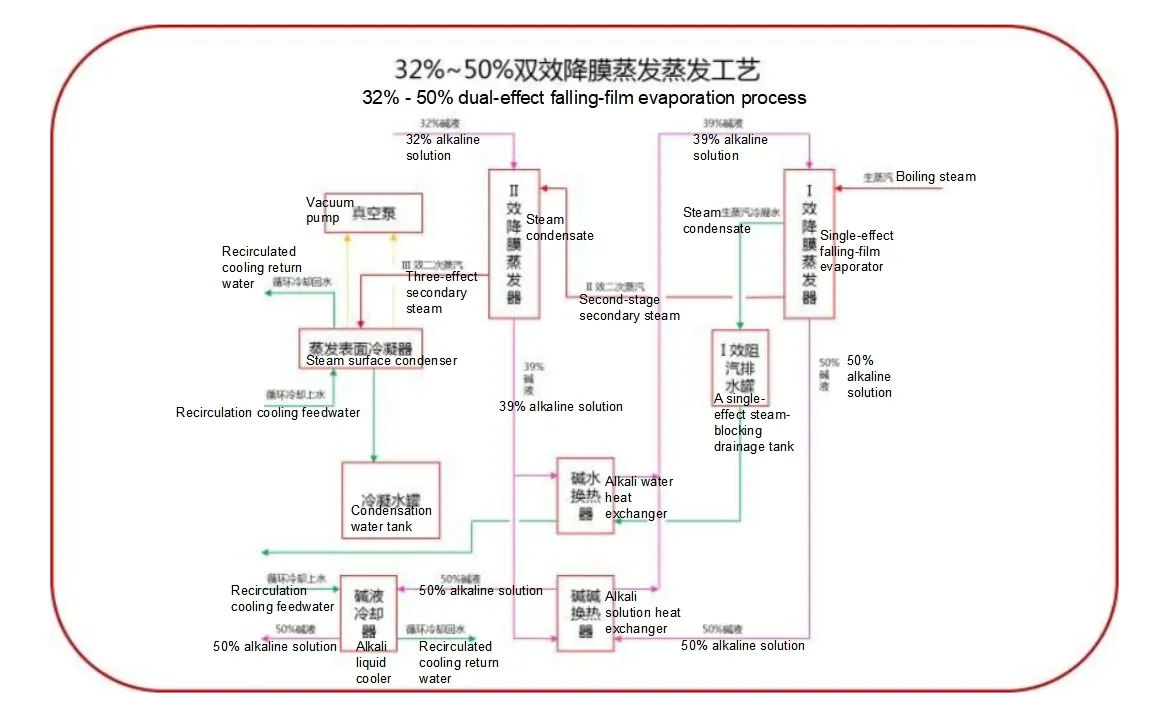
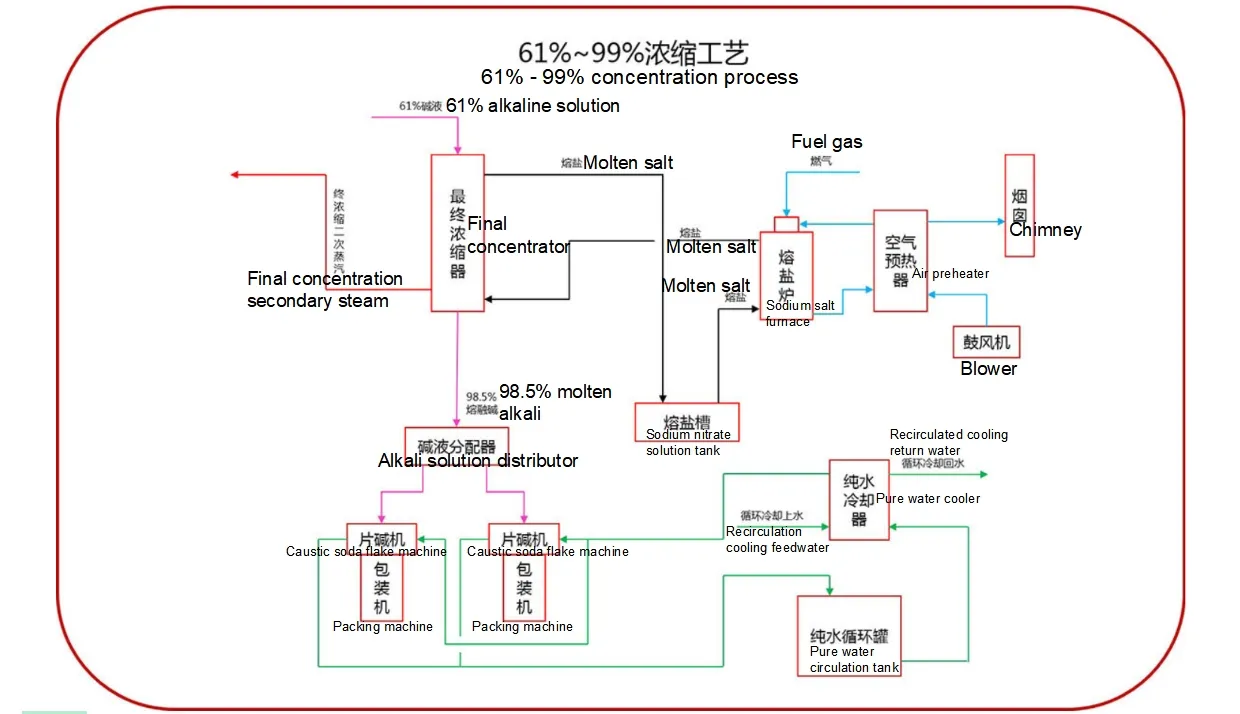
Process Diagram

Process Technology

  • Double-effect countercurrent falling film evaporation process concentrates 32% raw alkali to 61% liquid alkali.
  • High-concentration 61% alkali is dehydrated into molten alkali via high-temperature molten salt exchange in falling film tubes.
  • Semi-automatic packaging system for caustic soda flakes produced by two parallel machines.
  • 10% sugar solution addition reduces nickel equipment corrosion by removing sodium chlorate.
  • Flexible fuel options for molten salt furnace: natural gas, hydrogen, coal gas, or coal.
  • Air preheater implementation for full recovery of residual heat from high-temperature flue gas.
  • Closed-loop cooling water and vacuum water circulation maintained at ≤32°C for optimal flaking.
  • DCS control system ensures safe, stable, and automated operation of the entire unit.
  • Environmental protection via dust removal fan to wash and extract caustic soda flake dust.
  • Versatile production: Capable of producing both 50% liquid caustic soda and 99% flake caustic soda.
Process Flow

Process Flow Summary

Alkali Circuit

32% raw alkali is processed through II-effect and I-effect evaporators, increasing concentration to 47% then 61%. It then moves to the final concentrator where molten salt heat exchange creates molten alkali, eventually resulting in 99% caustic soda flakes after cooling and packaging.

Steam & Water Circuit

Steam enters the first-effect evaporator, with secondary steam reused in the second-effect evaporator. A vacuum is maintained via a surface condenser and vacuum pump. The water circuit includes circulating water for cooling, condensate for heat recovery and sucrose dissolving, and pure water for pump seal cooling.

Molten Salt System

Molten salt is heated from 395°C to 425°C in the heater before feeding the final concentrator. The system utilizes automated burners and air preheaters to optimize fuel efficiency and ensure precise temperature control for concentration.
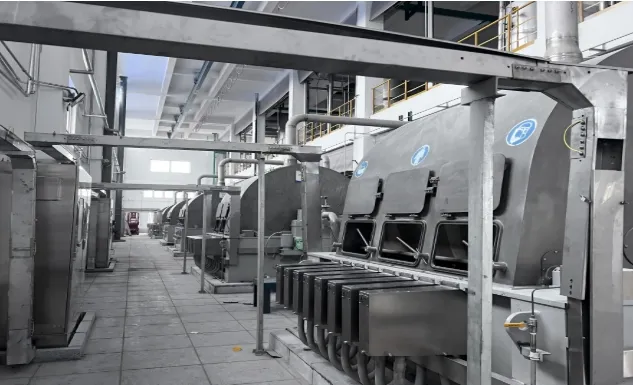

Technical Layout

Technical Expertise

Facility Overview

With 25 years of experience in chemical plant technology, our expertise lies in designing and manufacturing skid-mounted high-strength sodium hypochlorite and chlor-alkali systems. Our technology efficiently utilizes salt, water, and electricity to generate 10-15% sodium hypochlorite (NaOCl), hydrochloric acid (HCl), and caustic soda (NaOH) through advanced electrochemical reactions. We provide customized industrial designs tailored to specific project requirements.
?

Frequently Asked Questions

What is the final concentration of the caustic soda flakes?
The system is designed to produce high-purity caustic soda flakes with a concentration of 99%.
What are the primary raw materials required for operation?
The system primarily requires 32% raw alkali, industrial salt, electricity, and a fuel source (natural gas, hydrogen, or coal) for the molten salt furnace.
Is the plant operation automated?
Yes, the unit utilizes a DCS (Distributed Control System) to ensure fully automatic, safe, and stable operation of both the molten salt furnace and the caustic soda concentration system.
Can the system produce liquid caustic soda as well?
Yes, the unit is versatile and can be configured to produce both 50% liquid caustic soda and 99% flake caustic soda.
How does the system handle environmental concerns like dust?
A specialized dust removal fan is integrated to extract and wash caustic soda flake dust, significantly reducing environmental pollution.
How is equipment corrosion prevented?
A 10% sugar solution is introduced to remove sodium chlorate, which protects the nickel-based falling film evaporators from corrosion.

Related Products