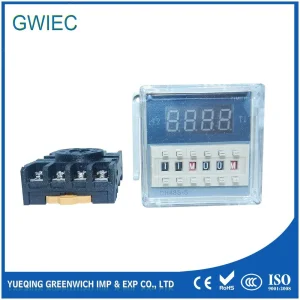
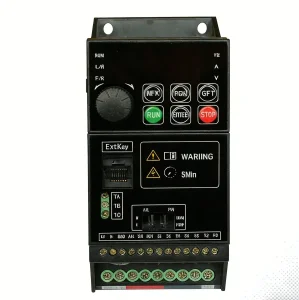
Mission-critical hardware components for seamless Hardware-in-the-Loop (HIL) integration, precision motion control, and industrial line commissioning.
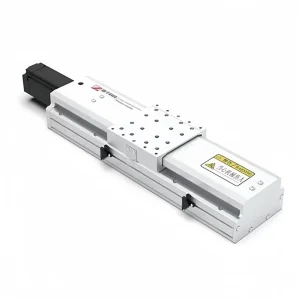
Why global manufacturing leaders are migrating from physical ramp-up to physics-based digital twins and real-time controller emulation.
In modern industrial engineering, Virtual Commissioning (VC) has evolved from an experimental digital twin methodology into a core operational requirement. By creating a high-fidelity 3D kinematic and physical simulation of production machinery connected directly to real or emulated Programmable Logic Controllers (PLCs), industrial enterprises can test, validate, and optimize automation code before physical hardware assembly takes place.
Historically, commissioning consumed up to 25% of the total project timeline, with over 60% of that time spent debugging PLC logic, resolving robot collisions, and tuning sensor feedback on the factory floor under severe schedule pressure. Today, the integration of Software-in-the-Loop (SIL) and Hardware-in-the-Loop (HIL) frameworks allows engineering teams to identify control flaws, mechanical interference, and cycle-time bottlenecks months before physical equipment deployment.
A rigorous benchmark of global market leaders based on real-time fieldbus emulation, CAD/kinematic fidelity, PLC ecosystem openness, and enterprise scalability.
| Manufacturer / Platform | Primary Focus Sector | Supported Simulation Modes | Key Strengths & Differentiators |
|---|---|---|---|
| 1. Siemens Digital Industries (Process Simulate / SIMIT) | Automotive BIW, Aerospace, Heavy Machinery | SIL, HIL, Physical Twin | Unrivaled integration with Totally Integrated Automation (TIA) Portal & Simatic PLCs. |
| 2. Dassault Systèmes (DELMIA 3DEXPERIENCE) | Complex Robotics, EV Battery Lines, Defense | SIL, Multi-Physics Twin | Native CATIA 3D model integration, multi-disciplinary kinematic co-simulation. |
| 3. Rockwell Automation (Emulate3D) | Material Handling, Logistics, Consumer Goods | SIL, HIL, VR/AR Training | Exceptional dynamic physics engine, native Allen-Bradley Studio 5000 binding. |
| 4. ABB Robotics (RobotStudio Virtual Commissioning) | Automated Arc Welding, Assembly, Pick & Place | SIL, Controller Emulation | True offline robot programming with identical virtual controller (Virtual Controller Technology). |
| 5. KUKA System Software (KUKA.Sim Pro) | Automotive Assembly, Heavy Load Material Handling | SIL, Path Planning Twin | Millimeter-precise cycle time prediction and collision detection for KUKA kinematics. |
| 6. Schneider Electric (EcoStruxure Machine Expert Twin) | Packaging, OEM Machinery, Food & Beverage | SIL, Parallel Engineering Twin | Reduces time-to-market by 30% for custom OEM machine developers. |
| 7. Visual Components | System Integrators, Factory Layout Planning | SIL, Layout Emulation | Rapid component library building, vendor-neutral OPC UA interface support. |
| 8. Maplesoft (MapleSim HIL) | High-Speed Precision Motion, Heavy Hydraulics | HIL, Model-in-the-Loop (MIL) | Symbolic physics engine delivering real-time execution speeds for complex dynamics. |
| 9. ISG-VIRTUOS (Industrial Simulation Group) | CNC Machine Tools, Automated Transfer Lines | HIL Real-Time Hard Targets | Deterministic hard real-time execution (<1ms response times) over EtherCAT and PROFINET. |
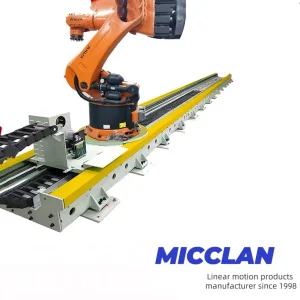
| 10. Shenzhen Eeptron PLC & Automation Ecosystem | Global Hardware Supply, Legacy PLC Sourcing, Line Retrofits | Physical-HIL Hybrid Bridging | Provides hard-to-find physical PLC modules, sensors, and 7th-axis hardware to execute HIL validation. |
Siemens leads the enterprise tier for complex automated production lines. Process Simulate allows engineers to validate robotic paths, human ergonomics, and PLC code in an integrated environment. When paired with SIMIT co-simulation, it acts as a full-scale emulator for physical signal behavioral modeling, bridging digital assets directly to S7-1500 real or virtual PLCs via PLCSIM Advanced.
DELMIA 3DEXPERIENCE powers high-tech manufacturing ecosystems. By maintaining a single source of truth from product CAD to line execution, DELMIA provides comprehensive multi-physics virtual commissioning. It excels in validating complex multi-robot cells, automated guided vehicle (AGV) traffic control, and sensor feedback logic in high-speed battery gigafactories.
Acquired by Rockwell, Emulate3D has become the benchmark for material handling, e-commerce fulfillment center design, and fast-moving consumer goods (FMCG). Its proprietary CAD-to-SIM pipeline enables rapid importing of mechanical models while native connectivity with ControlLogix PLCs provides seamless SIL testing.
ABB's RobotStudio features built-in Virtual Controller Technology (VCT). Because the simulation engine runs the exact software code executing on physical IRC5 or OmniCore controllers, cycle-time estimates achieved in RobotStudio match physical production floor metrics within a margin of under 1% deviation.
KUKA.Sim Pro is designed for off-line programming and virtual commissioning of KUKA robotic cells. Connecting directly to KUKA.OfficeLite, it allows full safety PLC validation, smart gripper sequencing, and kinematic Reachability analysis prior to mechanical build completion.
EcoStruxure Machine Expert Twin targets original equipment manufacturers (OEMs). Its parallel engineering workflow allows mechanical, electrical, and control software engineers to work simultaneously. This eliminates mechanical rework by detecting logical errors during early design stages.
How Shenzhen Eeptron PLC Co., Ltd. empowers global manufacturers with rapid hardware delivery, legacy replacements, and physical execution systems.
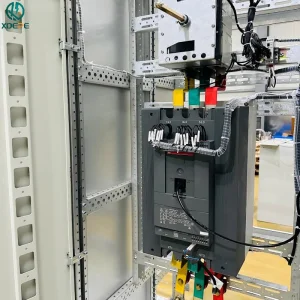
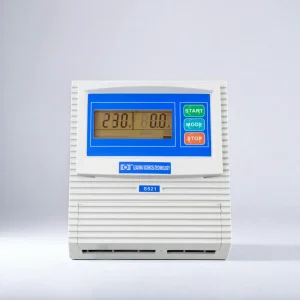
While software-based Virtual Commissioning (SIL) proves invaluable for early code structure validation, true operational readiness requires Hardware-in-the-Loop (HIL) testing. In HIL setups, actual PLC racks, safety light curtains, motion controllers, and flow instrumentation are connected via fieldbus protocols (PROFINET, EtherNet/IP, EtherCAT) to the simulation server.
This is where physical supply chain bottlenecks often occur: missing obsolete PLC modules, delayed delivery of linear actuators, or unprocurable industrial control units can halt a multi-million-dollar virtual validation pipeline.
Shenzhen Eeptron PLC Co., Ltd. was established with the mission of providing high-quality industrial automation replacement parts to customers worldwide. From the beginning, the company has been committed to delivering above-standard products and reliable services at competitive and fair prices. To ensure customer confidence, all products are backed by a 24-month warranty. Supported by an experienced and professional team, Eeptron consistently delivers dependable solutions that meet the demands of modern industry.
The company serves clients across Europe, the United States, the Middle East, and many other regions, offering flexible and fast shipping options, including next-day air delivery for urgent requirements. This efficient logistics network enables customers to minimize downtime and maintain smooth operations.

Shenzhen Eeptron PLC Co., Ltd. specializes in supplying a wide range of industrial automation equipment, with a particular focus on hard-to-find, discontinued, and obsolete parts. By maintaining strong sourcing capabilities and strict quality control standards, the company ensures that every component meets performance expectations.
Eeptron is dedicated to creating a seamless and hassle-free purchasing experience. Through continuous improvement, customer-centric service, and rigorous 100% pre-shipment bench testing, Eeptron guarantees that physical automation components match the exacting parameters required by modern virtual commissioning models.

Key architectural developments defining the future of industrial digital twins and hardware co-simulation.
Traditional virtual commissioning required heavy local GPU workstations. Next-generation platforms are shifting toward containerized, cloud-hosted physics engines (Docker/Kubernetes). This allows global engineering teams in Germany, the US, and China to work on the same virtual cell concurrently over WebGL browsers.
By leveraging Large Language Models fine-tuned on IEC 61131-3 Structured Text (ST) and Ladder Diagram (LD) standards, platforms are automatically converting kinematic simulation sequences into fully functional PLC logic blocks, drastically cutting initial code setup times.
Open Platform Communications Unified Architecture Field eXchange (OPC UA FX) coupled with Time-Sensitive Networking (TSN) provides deterministic, cross-vendor controller-to-controller virtual synchronization, breaking vendor lock-in between Siemens, Rockwell, and Omron ecosystems.
How leading manufacturers deploy Virtual Commissioning across diverse physical environments.
With hundreds of robotic arms operating in tight enclosures, virtual commissioning validates interlocking PLC logic, preventing catastrophic tool collisions during high-speed spot welding and adhesive application operations.
Ultra-precise travel axes (such as linear stages) require micro-meter level kinematic verification. Virtual commissioning models electromagnetic interference, vibration profiles, and particle safety controls prior to physical cleanroom deployment.
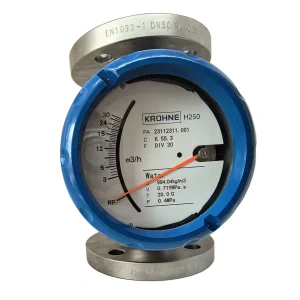
Integrating explosion-proof safety valves and high-performance flow meters into a digital twin allows safety integrity level (SIL-3/SIL-4) verification, simulating rapid shut-off response times (4-8 seconds) under emergency pressure spikes.
Expert answers to key engineering and procurement queries regarding Virtual Commissioning and hardware implementation.
Explore precision instrumentation, control units, safety valves, and heavy-duty actuators ready for deployment.
 Eeptron PLC