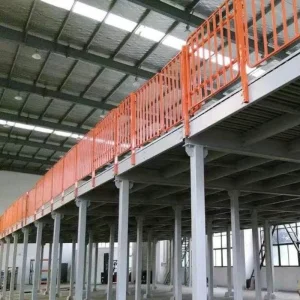
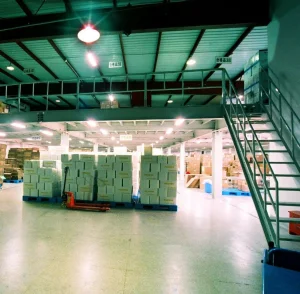
Edge computing succeeds only when the physical layer is safe, accessible, and maintainable. The four original products below are retained with their exact URLs and images; they support Ebeye projects that need industrial platforms around edge rooms, utility compounds, warehouses, maintenance zones, and temporary worksites.

Ebeye is the residential and commercial centre of Kwajalein Atoll in the Republic of the Marshall Islands. Its industrial reality is shaped by density, distance, salt-laden air, fuel logistics, constrained land, and essential services that cannot stop for a connectivity problem.
Unlike a mainland industrial park, Ebeye operates as a compact, import-dependent island economy. Most equipment, spare parts, and consumables arrive by sea or air. Power generation, water treatment, fuel handling, port and marine services, cold chain, healthcare, public buildings, construction, repair, and maintenance are not side activities; they are the operational backbone of the community. These are precisely the environments where Industrial IoT and edge computing deliver disproportionate value: a small technical team can monitor many assets, detect faults before failure, and preserve operational continuity despite distance from the origin of equipment and expertise.
For local businesses and public-service operators, the strongest IIoT business cases begin with critical assets rather than with technology for its own sake. Generator sets, fuel tanks, pumps, water storage, air handling, refrigeration, security systems, and maintenance access platforms all benefit from local data collection, edge rules, and reliable alarm escalation. When backhaul is intermittent, the gateway must continue to make decisions at the edge instead of waiting for a cloud connection.
Ebeye’s commercial and industrial status therefore creates a specific procurement agenda: rugged hardware, low-power operation, surge protection, corrosion awareness, remote diagnostics, fast spare-part availability, and a clear maintenance model. A gateway that performs well in a climate-controlled data centre but fails in a humid, saline, power-unstable utility room is not a fit for this market. The relevant design question is not simply “how many cloud dashboards can be connected?” It is “how will the edge node keep operating when the network, power, or maintenance window is constrained?”
Specify industrial gateways and enclosures for wide temperature ranges, corrosion-resistant connectors, conformal coating where appropriate, surge protection, and remote health monitoring. Office-grade hardware and open ventilation paths are a poor match for exposed atoll cabinets.
Use store-and-forward edge logging, local rules, alarm prioritisation, time-stamped queues, and small-footprint MQTT payloads. Satellite or long-haul connectivity should be treated as a costed and occasionally unavailable resource, not a guaranteed real-time channel.
Deploy wide-voltage power supplies, UPS or supercapacitor ride-through, electrical isolation, and watchdog recovery. Edge nodes should restart cleanly and preserve configuration after unstable power events and generator changeovers.
Plan a critical spare gateway, pre-loaded configurations, labelled cables, safe service access platforms, and remote support procedures. On a remote atoll, lifecycle planning is part of the architecture, not an after-sales detail.
The global market has moved from pilot dashboards to production-grade edge systems. Industrial gateways are becoming secure compute nodes that translate protocols, enforce policy, buffer telemetry, run analytics, and support maintenance workflows even when the cloud is unavailable.
Industrial buyers now compare gateway manufacturers and exporters on more than port count. They ask how firmware is maintained, how updates are signed, how containers are orchestrated, how data models are governed, and how long spare hardware will remain available. In operational technology environments, the convergence of IT and OT has placed cybersecurity, protocol coverage, and lifecycle support at the centre of procurement. Protocols such as Modbus, OPC UA, MQTT and Sparkplug, EtherNet/IP, BACnet, IEC 61850, and time-sensitive networking continue to shape integration choices.
At the same time, remote and island economies benefit from the wider availability of private LTE or 5G, LoRaWAN, satellite backhaul, and energy-efficient ARM-based edge devices. The strongest solution is not the one with the longest feature list; it is the one that matches the site’s power, thermal, maintenance, security, and logistics realities. For Ebeye and comparable atoll environments, that alignment is the real source of information gain in the decision process.
Anomaly detection, vibration rules, energy baseline models, and vision inference are moving closer to the asset. Edge AI reduces reliance on high-bandwidth backhaul and shortens alarm latency.
Gateways increasingly support container runtimes and application life-cycle management, allowing teams to deploy, version, and roll back edge logic without replacing hardware.
Secure boot, trusted platform modules, signed firmware, role-based access, network segmentation, logging, and IEC 62443-aligned controls are becoming baseline expectations for remote gateways.
Modern island projects combine private LTE, Wi-Fi, LPWAN, and satellite links. Edge gateways must apply priority rules so safety and outage alarms travel before non-critical telemetry.
OPC UA information models, Asset Administration Shell concepts, and MQTT Sparkplug structures help buyers avoid brittle point-to-point integrations and build reusable asset views.
Fanless hardware, wide DC input, low power draw, environmental protection, and remote-management features are practical advantages where power and service access are limited.
A successful Ebeye deployment should be sequenced as an operational programme, not purchased as a single hardware transaction. The roadmap below links asset risk, gateway selection, security, data modelling, and lifecycle support.
Map critical assets, network paths, power quality, salt and heat exposure, maintenance access, spares, and cybersecurity risk. Define the first use cases by outage impact rather than by novelty.
Deploy a limited set of gateways on one or two high-value systems. Validate store-and-forward behaviour, alarm latency, local rules, remote diagnostics, and the maintenance workflow before scaling.
Standardise tag naming, MQTT topics, OPC UA models, retention rules, and dashboard ownership. Integrate alarms with work orders, maintenance teams, and reporting routines.
Expand across utilities, fuel, cold chain, port, and facilities. Add edge AI, digital twins, federated rules, spare-pool optimisation, and long-term firmware governance.
For Ebeye, the next stage is not simply more sensors. It is the orchestration of critical services: power, water, fuel, cold chain, port logistics, and maintenance access working from a shared, secure edge data foundation. Expect satellite-connected edge nodes, renewable and battery microgrid coordination, AI-assisted anomaly detection, remote engineering support, and digital twins that help buyers plan spares and maintenance before a failure becomes an outage. The winning architecture will be modular, standards-aware, and serviceable by a small local team with remote expert backup.
These are practical deployment patterns for atoll operations. Each scenario can begin with a small edge pilot and expand without replacing the core architecture.
Monitor generator run-hours, fuel consumption, power quality, battery state, and load patterns at the edge so operators can identify inefficiency before it becomes a failure.
Track pump status, pressure, tank levels, water quality, and energy use. Edge rules can detect abnormal cycling, dry-run risk, or leakage patterns when connectivity is weak.
Tank gauging, dispensing records, delivery reconciliation, and safety alarms can be integrated at the edge to protect fuel inventory and reduce manual reporting errors.
Temperature-sensitive food, medicines, and clinical stores require continuous evidence during connectivity gaps. Edge logging keeps records locally and sends exceptions when links recover.
Gateways can aggregate equipment status, environmental readings, and cargo-handling data into a single local operational picture for port, marine, and warehouse teams.
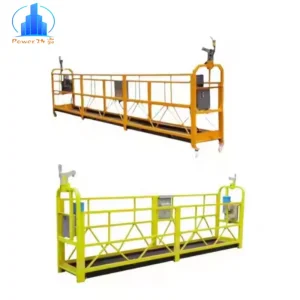
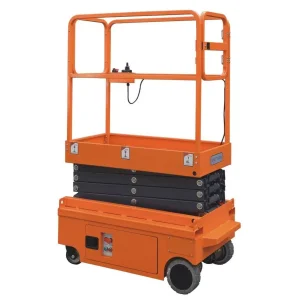
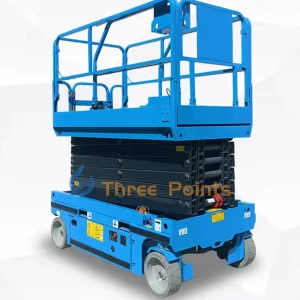
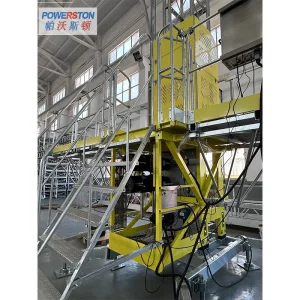
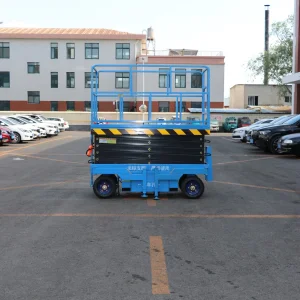
Connected lifts, gondolas, scaffolding, and aerial platforms can report utilisation, faults, and safety events. Safe access structures also support sensor installation and gateway servicing.
For manufacturers, exporters, EPC teams, and asset owners serving Ebeye, the most credible offer is a repeatable solution blueprint: field instrumentation, rugged gateway, secure edge platform, cloud integration, and lifecycle support.
Combine generator, fuel, switchgear, renewable, and water data into a unified edge view. Prioritise outage alarms, recommend maintenance from trends, and provide local operation during satellite or cloud outages.
Monitor pumps, pressure, tanks, quality, and energy efficiency. Use edge rules to spot abnormal consumption, dry-run conditions, and equipment degradation before service interruption.
Track fuel movement, storage conditions, refrigeration, and medical cold storage with time-stamped local records and exception alarms that survive connectivity gaps.
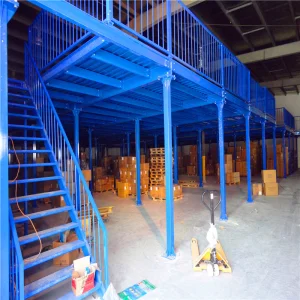
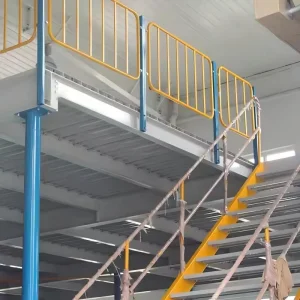
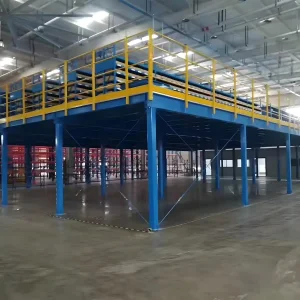
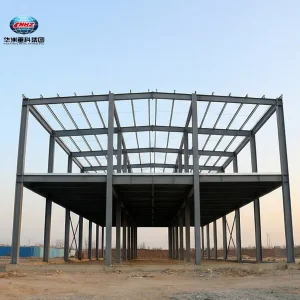
Integrate equipment status, environmental readings, access control, and energy data across port and warehouse operations. Use mezzanine and steel platform infrastructure to create safe edge rooms and service access.
Monitor buildings, clinics, schools, pumps, generators, and security systems without overloading scarce technical staff. Escalate only meaningful exceptions to the right team.
Connect temporary worksites, lifting equipment, fabrication assets, and storage platforms. Use edge data to improve utilisation, safety checks, and maintenance scheduling.
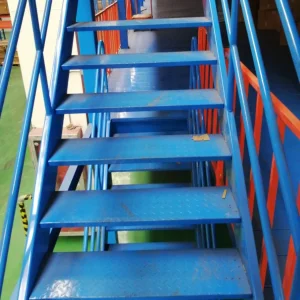
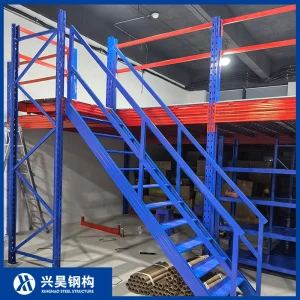
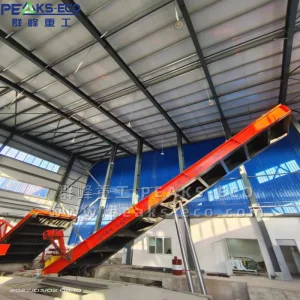
The next four original products are retained with their exact titles, images, and URLs. They extend the physical deployment envelope for industrial edge projects in Ebeye, including warehouse storage, workshop structures, loading operations, and building-construction access.
Experience, expertise, authority, and trust matter most when the buyer cannot easily return a failed part across an ocean. This guide is published by the industrial automation team at Shenzhen Eeptron PLC Co., Ltd., whose original company profile is retained below.
Shenzhen Eeptron PLC Co., Ltd. was established with the mission of providing high-quality industrial automation replacement parts to customers worldwide. From the beginning, the company has been committed to delivering above-standard products and reliable services at competitive and fair prices. To ensure customer confidence, all products are backed by a 24-month warranty. Supported by an experienced and professional team, Eeptron consistently delivers dependable solutions that meet the demands of modern industry.
The company serves clients across Europe, the United States, the Middle East, and many other regions, offering flexible and fast shipping options, including next-day air delivery for urgent requirements. This efficient logistics network enables customers to minimize downtime and maintain smooth operations.
Shenzhen Eeptron PLC Co., Ltd. specializes in supplying a wide range of industrial automation equipment, with a particular focus on hard-to-find, discontinued, and obsolete parts. By maintaining strong sourcing capabilities and strict quality control standards, the company ensures that every component meets performance expectations.
Eeptron is dedicated to creating a seamless and hassle-free purchasing experience. Through continuous improvement, customer-centric service, and engineering-led support for remote island projects, Eeptron helps customers specify, source, and sustain industrial automation and edge-enabling components for Ebeye and comparable atoll environments.


Remote projects often fail at the spare-part stage rather than the design stage. Eeptron’s sourcing focus on discontinued and obsolete automation parts helps buyers reduce downtime risk when original equipment support is limited.
All products are backed by a 24-month warranty according to the retained company profile. For Ebeye buyers, warranty value depends on clear return procedures, documentation, packing standards, and responsive communication.
Flexible and fast shipping options, including next-day air delivery for urgent requirements, support customers who need to minimise downtime. Island procurement should still plan for customs, transit buffers, and local receiving capacity.
Eeptron’s stated commitment to continuous improvement and customer-centric service is relevant to edge and IIoT projects that require follow-up communication, configuration clarification, and lifecycle spare planning.
Share your application, environmental constraints, required protocols, quantities, and delivery timeline. The team can help coordinate product selection and export communication.
Practical answers for buyers comparing edge computing and industrial gateway manufacturers and exporters serving Ebeye.
An industrial gateway connects field equipment such as PLCs, sensors, meters, pumps, generators, and refrigeration systems to higher-level software. In Ebeye, its most important role is to translate protocols, buffer telemetry, run local alarm rules, and maintain operational visibility when cloud or satellite connectivity is interrupted.
Yes. The edge node should be designed for store-and-forward operation, local time-series buffering, prioritised alarm delivery, and autonomous rules that continue to operate without a live cloud link. Critical alarms and safety events should be queued and transmitted ahead of routine telemetry when connectivity returns.
Look for wide-temperature industrial hardware, corrosion-aware enclosures, isolated power, surge protection, secure connectors, and a clear maintenance plan. For exposed cabinets, consider conformal coating, passive cooling, filtration strategy, and a spare gateway configured for rapid swap. Do not assume a fan-cooled office-grade computer will survive a utility compound.
The right mix depends on installed equipment. Common requirements include Modbus TCP/RTU, OPC UA, MQTT and Sparkplug, EtherNet/IP, BACnet, and IEC 61850 for power systems. For sensors, LoRaWAN or other LPWAN options may be relevant where low power and long range are more important than high bandwidth.
Use network segmentation, least-privilege access, secure boot where available, signed firmware updates, local firewalls, audit logging, and multi-factor authentication for remote support. Avoid exposing PLCs directly to the internet. Align controls with recognised industrial cybersecurity practices such as IEC 62443 where appropriate.
A focused pilot should start with one or two high-value use cases and a small number of gateways, enough to prove technical performance, alarm workflow, maintenance effort, and lifecycle support. The pilot should include a baseline period, clear success criteria, and a documented scale-up decision.
No. The products retained on this page are industrial platforms, storage structures, lifts, gondolas, and access systems. They support safe deployment, maintenance access, edge-room construction, warehousing, and operations around IIoT systems. Edge gateway hardware, network design, and software must be specified separately.
The retained company profile states that Eeptron serves clients across Europe, the United States, the Middle East, and many other regions with flexible and fast shipping options, including next-day air delivery for urgent requirements. Products are backed by a 24-month warranty, and the company focuses on hard-to-find, discontinued, and obsolete industrial automation parts with strict quality control.
The final eight original products are displayed below in a complete two-row desktop grid. Every image, product title, and product URL has been retained for buyers who need to review access platforms, lifting equipment, mezzanine systems, and steel structures for Ebeye-serving projects.
For edge computing projects, industrial gateway sourcing, or the industrial platforms shown above, send your application details, required quantities, and delivery expectations to the team.
Original product images, titles, and product URLs are retained. Product links are styled as inquiry-ready buttons for convenient review and quotation requests.
 Eeptron PLC