China Top 10 Ways to Ensure Industrial Automation Safety?

Time:2026-11-24 Author:Amelia
0%

Industrial automation can raise output, improve repeatability, and reduce exposure to some hazardous tasks. It also introduces risks from unexpected machine movement, stored energy, software faults, and gaps between people and equipment. A robot arm stopping correctly during a test does not prove that every operating condition is safe. Small details matter. In factories across China, production lines may combine legacy machines, new controllers, conveyors, and components from several suppliers. That mix makes clear procedures and regular checks essential. The right safeguards depend on the process, the machinery, and the people working nearby.

How do teams decide what to address first? This guide explores how to ensure safety in automated industrial systems through ten practical areas. These include risk assessment, machine guarding, emergency stops, energy isolation, worker training, and preventive maintenance. It also considers sensor validation, clear warning signs, incident reporting, and changes made after equipment upgrades. Reliable safety work depends on documented inspections, competent personnel, and instructions that match actual site conditions. Qualified local professionals should check applicable Chinese requirements and equipment-manufacturer guidance. A checklist helps, but cannot replace a site-specific engineering review. Even careful teams can overlook hazards when routines change or production pressure rises. That deserves honest attention. The aim is not to promise zero risk; it is to identify hazards early, reduce exposure, and keep improving.
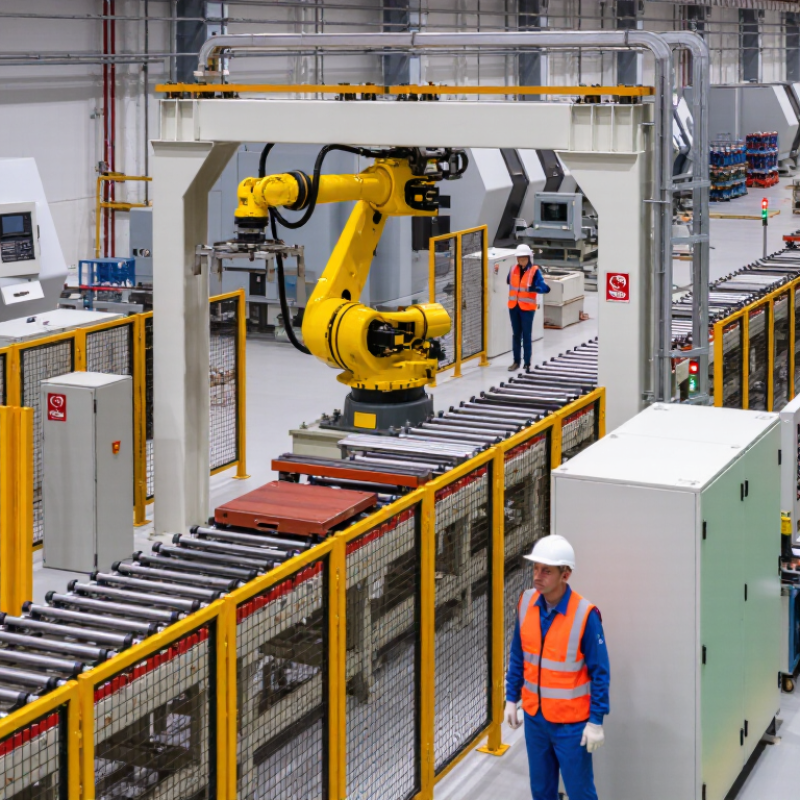
China Top 10 Ways to Ensure Industrial Automation Safety?

Understanding Industrial Automation Safety Requirements in China

Understanding Industrial Automation Safety Requirements in China

China’s Work Safety Law places responsibility on employers to prevent and control workplace hazards. For machinery design, engineers commonly consult GB/T 15706-2012 on risk assessment and risk reduction, and GB/T 5226.1-2019 on electrical equipment. These are recommended national standards; applicable mandatory rules and sector-specific requirements still need checking. A robot cell may look orderly, yet a poorly placed light curtain or an undocumented maintenance bypass can leave workers exposed.

2.93 million work-related deaths

395 million non-fatal work injuries

The International Labour Organization estimated 2.93 million work-related deaths and 395 million non-fatal work injuries worldwide in 2019, reported in its 2023 global estimates. These figures are not specific to automation, but they underline why risk controls must work in daily operations, not only during commissioning. Record the risk assessment, validate safety-related controls, and provide clear Chinese-language operating and maintenance instructions. Paperwork alone is not protection.

Tips: Walk the line with operators. Test guards, interlocks, and emergency stops under realistic conditions. Plan safe energy isolation before maintenance. One point is easy to miss: production pressure can encourage workarounds, so review near misses and revise procedures when the actual workflow differs from the documented one.

Assessing Risks Across Machines, Processes, and Worksites

A reliable industrial safety review looks beyond machine guards. Inspect presses, conveyors, robot cells, and hand tools for pinch points, unexpected movement, and difficult emergency stops. Watch a full production cycle, including setup and cleaning. A hazard may appear only when an operator reaches around a fixture or clears a jam. Small details matter.

Tips: Trace each task from start to finish. Ask operators where workarounds occur. Check whether emergency stops are reachable from actual working positions. Record who may enter each machine zone, including maintenance staff and contractors.

Assess processes as well as equipment. A safe machine can become risky when production speeds change, materials vary, or several tasks happen at once. Review handoffs, alarms, energy isolation, and restart procedures. Then walk the worksite: look for blocked aisles, poor lighting, slippery floors, and noise that masks warnings. Recheck after layout changes or near misses. We often miss familiar hazards because they blend into the daily routine; that is worth admitting. Keep findings specific, with an owner and a practical correction date.

Applying the Ten Core Safeguards for Industrial Automation

Applying the ten core safeguards means treating safety as a system, not a single emergency stop. Start with a task-based risk assessment. Fit physical guards and interlocked access points. Use safety-rated controls, clearly placed emergency stops, and documented lockout procedures. Keep walkways and maintenance access free of cables, oil, and stored parts. Small details matter.

The International Labour Organization’s 2023 global estimates report 2.93 million work-related deaths and 395 million non-fatal work injuries each year. These figures cover workplaces broadly, not automation alone, but they show why prevention needs sustained attention. The U.S. Bureau of Labor Statistics recorded 5,283 fatal work injuries in 2023. Its Census of Fatal Occupational Injuries is a sobering reminder that safeguards must work beyond the design document.

The remaining protections are practical: control access to automation networks, train operators and maintenance teams, inspect equipment on a set schedule, and review near misses. NIST’s Guide to Operational Technology Security emphasizes that security measures should account for operational and safety needs. A software change, for example, should not quietly disable an interlock. We still miss things. A rushed restart can expose gaps between written procedures and real work, so teams should test safeguards during normal shifts and after changes.

China: Top 10 Ways to Ensure Industrial Automation Safety

Applying the Ten Core Safeguards for Industrial Automation

The chart shows IEC 61508 risk-reduction-factor ranges for Safety Integrity Levels (SIL) in low-demand mode. Risk assessment helps determine the required SIL for safety functions such as interlocks and emergency shutdowns. Combine these functions with machine guarding, safe work procedures, training, inspection, and maintenance; no single safeguard ensures safety.

Training Workers and Maintaining Safe Operating Procedures

China Top 10 Ways to Ensure Industrial Automation Safety?
Training Workers and Maintaining Safe Operating Procedures

An automated line is only as safe as the people who set, clear, and maintain it. The International Labour Organization’s 2023 estimates report nearly 3 million work-related deaths and 395 million non-fatal work injuries worldwide each year. These figures cover all sectors, not automation alone, but they show why routine competence matters. Keep training tied to real tasks: teach operators to recognize a stalled conveyor, verify energy isolation, and call a supervisor before reaching into a guarded cell. Short practice beats a forgotten slide deck. Then check understanding through observed demonstrations, not attendance sheets alone. That distinction is easy to miss.

Safe operating procedures should be brief, available at the machine, and updated after equipment changes or near misses. Include startup checks, emergency stops, jam-clearing steps, and clear shift handover notes. The U.S. Occupational Safety and Health Administration’s machine-guarding guidance emphasizes guarding hazardous points of operation; training cannot replace physical safeguards. Supervisors should observe actual work and invite workers to report confusing steps without blame. Record revisions, retrain affected teams, and test whether procedures hold up under production pressure. Paperwork can look complete while habits drift. Review it anyway.

China: Top 10 Ways to Ensure Industrial Automation Safety — Training Workers and Maintaining Safe Operating Procedures
No. Safety Area Safe Operating Practice Worker Training Maintenance and Verification
1 Machine risk assessment Identify hazards such as crushing, shearing, entanglement, unexpected start-up, and stored energy before operating or modifying equipment. Apply safeguards appropriate to the assessed risks. Train operators and maintenance personnel to recognize hazards, understand restricted areas, and report changes in machine conditions or work tasks. Review the assessment when equipment, software, tooling, materials, or work methods change, and after incidents or near misses.
2 Machine guarding and interlocks Keep fixed guards, movable guards, light curtains, and interlocks in place and functional. Never bypass or defeat a safety device to maintain production. Show workers how guards and protective devices work, how to identify damage or faults, and how to stop work if protection is compromised. Inspect safeguards at a risk-based interval and after repair or adjustment. Record defects and keep affected equipment out of service until safe operation is restored.
3 Energy isolation and lockout Before servicing, isolate relevant electrical, pneumatic, hydraulic, mechanical, and other energy sources. Release or secure stored energy and verify isolation before work begins. Train authorized personnel in the site’s isolation procedure, device use, verification steps, and rules for shift handover and group work. Keep machine-specific isolation instructions available. Periodically review procedures and investigate any unexpected energization or isolation failure.
4 Standard operating procedures Use clear, current procedures for normal start-up, operation, changeover, cleaning, troubleshooting, and shutdown. Define safe states and stop-work conditions. Provide hands-on instruction before independent work and confirm that workers can follow the relevant steps, warnings, and escalation process. Review procedures after process changes, equipment modifications, incidents, or identified gaps. Remove obsolete copies from work areas.
5 Robot and automated-cell access Control access to robot cells and other automated zones. Use designated entry procedures and appropriate protective measures before entering a hazardous area. Teach workers about robot reach, automatic restart risks, entry authorization, safe recovery, and communication with nearby operators. Check access controls, protective devices, warning indicators, and emergency-stop functions. Reassess the cell after layout or program changes.
6 Safe fault recovery Use an approved recovery method for jams, misfeeds, sensor faults, and interrupted cycles. Do not reach into a machine that may move or restart unexpectedly. Train designated personnel to diagnose faults safely, apply energy-isolation rules when required, and call for qualified support when the condition is unclear. Review recurring faults and near misses. Correct underlying causes rather than relying on repeated manual intervention.
7 Preventive maintenance Maintain equipment according to risk, operating conditions, and manufacturer instructions. Address worn, loose, leaking, damaged, or overheating components promptly. Ensure maintenance workers are competent for assigned tasks and understand isolation, stored-energy hazards, and post-maintenance safety checks. Use documented maintenance records that identify the equipment, work performed, defects found, corrective actions, and return-to-service checks.
8 Emergency stops and alarms Keep emergency stops accessible and unobstructed. Use them for emergencies, not as a substitute for normal shutdown or energy isolation. Explain when to activate an emergency stop, how to raise an alarm, and why the cause must be investigated before equipment is restarted. Test emergency-stop devices and alarms under a documented inspection plan. Repair faults promptly and verify function before returning equipment to use.
9 Competence and communication Assign tasks only to workers who have received appropriate instruction and authorization. Communicate hazards during shift changes, contractor work, and simultaneous operations. Keep training practical and role-specific. Include new workers, temporary workers, contractors, and workers affected by revised procedures. Maintain training and authorization records. Reassess competence when duties change, performance concerns arise, or procedures are updated.
10 Incident reporting and improvement Encourage prompt reporting of injuries, near misses, unsafe conditions, and safety-device faults without discouraging workers from stopping unsafe work. Show workers how to report concerns, preserve relevant information, and participate in practical reviews of incidents and corrective actions. Investigate contributing factors, assign corrective actions, and check whether they are effective. Share lessons with affected teams and update controls where needed.

Monitoring Safety Performance and Improving Protection Systems

Monitoring safety performance means tracking real conditions, not just completed inspections. The U.S. Bureau of Labor Statistics recorded 5,283 fatal work injuries in 2023, a broad workplace benchmark, not an automation-specific figure. For each production line, review near misses, guard-interlock faults, emergency-stop tests, and corrective-action closure times. A rising fault count may signal a deteriorating safeguard, even when output remains high. A green dashboard can still hide a bypassed guard.

Protection systems need regular validation after equipment changes. Check that light curtains stop motion at the expected distance, safety doors interrupt hazardous movement, and restart controls require deliberate action. Record test results, owners, and repair dates. Compare trends by machine and shift; averages can conceal one persistently unsafe cell. No metric replaces a walk-through with operators. Their practical observations often expose gaps in procedures.

Tips: Keep a short monthly review. Test safeguards under realistic operating conditions, document every bypass, and assign a named person to close each defect. Review recurring alarms with maintenance and operators. Imperfect records are common; treat missing data as a warning, not proof of safety.

FAQS

Which machines should a safety review cover?

Inspect presses, conveyors, robot cells, and hand tools. Look for pinch points, unexpected movement, and hard-to-reach emergency stops.

Why observe a full production cycle?

Hazards may appear during setup, cleaning, or jam clearing. An operator reaching around a fixture can face risks missed during normal operation. Small details matter.

What should reviewers ask operators?

Ask where workarounds happen and who enters machine zones. Include maintenance staff and contractors, not only regular operators.

Can a safe machine become risky during production?

Yes. Speed changes, different materials, and overlapping tasks can alter the risk. Review handoffs, alarms, energy isolation, and restart steps.

What worksite conditions should be checked?

Look for blocked aisles, poor lighting, slippery floors, and noise that masks warnings. Recheck after layout changes or near misses.

Which safety measures are useful to track?

Review near misses, guard-interlock faults, emergency-stop tests, and action closure times. A rising fault count may reveal a weakening safeguard.

How should protective systems be validated?

After equipment changes, test light curtains, safety doors, and restart controls under realistic conditions. Record results, owners, and repair dates.

What can safety statistics show?

There were 5,283 fatal work injuries in the United States in 2023. This is a broad workplace benchmark, not an automation-specific figure.

Can a green dashboard prove a machine is safe?

No. A bypassed guard or missing record can be hidden by averages. Walk through the area and listen to operators. We can miss familiar hazards.

Conclusion

Industrial automation safety in China begins with understanding the applicable workplace requirements and identifying hazards throughout the facility. A thorough assessment should consider machines, production processes, maintenance tasks, and worksite conditions, including how people interact with automated equipment. This helps teams prioritize risks and choose safeguards suited to their operations.

The ten core safeguards should work together: protect hazardous areas, manage access, provide emergency stops, use reliable interlocks, control energy during maintenance, and keep equipment in safe condition. Clear operating procedures and practical worker training help ensure these measures are understood and followed. Regular inspections, incident reviews, and safety-performance monitoring can reveal gaps and guide improvements. By combining risk assessment, effective safeguards, and ongoing review, organizations can develop a practical approach to how to ensure safety in automated industrial systems.

Amelia

Amelia

Amelia is a seasoned marketing professional with a wealth of expertise in our company’s core offerings. With an unwavering passion for driving growth and innovation, she plays a pivotal role in shaping our marketing strategies and enhancing brand visibility. A key aspect of her responsibilities......