In today's rapidly evolving industrial landscape, the question arises: what is the role of automation in smart factories? Recent reports highlight significant trends. According to a 2022 McKinsey report, companies implementing automation witness productivity improvements of up to 30%. As industries embrace smart technology, automation becomes crucial in optimizing operations.
Smart factories integrate advanced technologies like IoT, AI, and robotics. These technologies enhance efficiency and reduce human error. A study by PwC noted that 40% of manufacturers believe automation is essential for maintaining competitive advantage. Yet, the journey towards full automation is not without challenges. Skills gaps and initial setup costs raise questions.
Automation can lead to job displacement, stirring concerns among workers. Balancing these elements is vital. The path to a fully automated factory requires careful planning and consideration of workforce impacts. Understanding the nuanced role of automation reveals a complex but promising future in manufacturing.
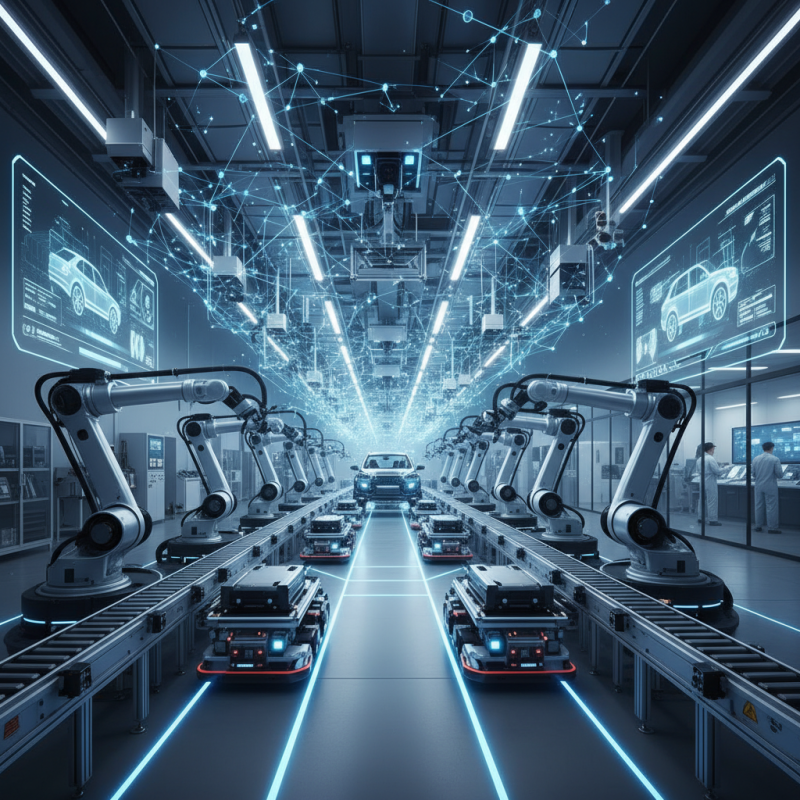
Smart factories are transforming the manufacturing landscape. The term refers to highly digitized environments that leverage various technologies. Key features include IoT devices, advanced robotics, and real-time data analytics. A report by McKinsey indicates that smart factories can boost productivity by up to 30%.
Integration of automation is crucial in these settings. Automated systems minimize human error and optimize production lines. However, the human element remains vital. Employees need training to work alongside these technologies effectively. The World Economic Forum highlights a potential skills gap, predicting that by 2025, 85 million jobs may be displaced.
Real-time monitoring is another critical aspect. Sensors collect data, allowing for immediate adjustments in workflows. However, dependency on technology raises questions about cybersecurity. As production becomes more interconnected, vulnerabilities may increase. Companies must balance innovation with risk management strategies to navigate this complex landscape effectively.
Automation plays a critical role in modern manufacturing. It transforms how factories operate. With advanced technologies, companies can increase efficiency and reduce costs. Robots and automated systems handle tasks that used to rely on human labor. This shift improves productivity significantly.
However, automation isn’t without challenges. Many workers face job displacement due to machines taking over repetitive tasks. This raises concerns about the future of work. Manufacturers must address this issue by providing training programs. Upskilling employees can bridge the gap between technology and human skill.
Moreover, the integration of automation can sometimes lead to errors. Miscommunication between machines can result in production delays. Companies need to monitor systems closely to minimize these risks. It’s essential to balance efficiency with quality control. The investment in automation needs careful planning and reflection. Understanding these complexities can help in making informed decisions.
In smart factories, automation technologies play a crucial role in enhancing efficiency and productivity. Robotics is one of the most visible forms of automation. According to the International Federation of Robotics, global sales of industrial robots grew by 20% in 2021. This surge highlights the increasing reliance on robotic systems for tasks like assembly, packaging, and quality control. These machines can operate continuously without fatigue, improving production rates significantly.
Another key technology is the Internet of Things (IoT). A report from McKinsey indicates that connected devices can reduce operational costs by 10-40%. IoT enables real-time data collection and analysis. This aids in predictive maintenance, preventing costly downtimes. Moreover, advances in machine learning allow systems to optimize processes based on historical data. However, integrating these technologies can be complex, often requiring extensive workforce training.
There’s a shift towards collaborative robots, or cobots. They work alongside human workers, enhancing flexibility. A study by Deloitte found that companies using cobots experienced a 15% increase in overall productivity. But not all implementations go smoothly. Companies may face challenges in safety and employee acceptance. Balancing automation with the human element is crucial for long-term success in smart factories.
Automation significantly boosts efficiency in smart factories. By integrating advanced technologies, production processes become faster and more reliable. Robots and machines can operate 24/7, minimizing downtime. This leads to increased output and reduced labor costs. However, over-reliance on automation may create challenges, like job displacement. Workers may need reskilling as certain tasks become obsolete.
Automation also enhances quality control. Automated systems reduce human error in manufacturing. They monitor processes in real time, allowing for immediate adjustments. This can lead to better product consistency. Yet, the initial investment in automation can be high. Companies must weigh costs against potential long-term benefits.
While automation benefits overall productivity, it also brings complexities. Data security becomes a significant concern with increased connectivity. Businesses must ensure their systems are protected from cyber threats. Additionally, relying solely on machines could lead to a lack of innovation. Human insight is crucial for creative problem-solving. Balancing machine efficiency with human capability is key for sustainable growth.
Implementing automation systems in smart factories comes with a range of challenges that require careful consideration. According to a report by McKinsey, nearly 60% of manufacturing jobs could be automated. However, this potential comes with hurdles. For instance, companies often face significant upfront costs. These initial investments can deter many manufacturers from fully committing to automation.
Moreover, staff training is critical. A study by the World Economic Forum highlighted that by 2025, more than 85 million jobs could be displaced due to automation. Upskilling and reskilling existing employees is vital. Yet, many organizations struggle to align training programs with evolving technology. This disconnect can lead to underutilization of new systems, ultimately hampering productivity.
Furthermore, data security remains a pressing concern. As automation systems become more integrated, cybersecurity vulnerabilities increase. The Ponemon Institute reported that 70% of organizations experienced at least one IoT-related breach in the past year. Factories must prioritize robust security frameworks while implementing these new automated systems. A thoughtful approach to these challenges can enhance the effectiveness of automation in smart factories.
| Dimension | Details |
|---|---|
| Definition of Automation | The use of technology to perform tasks without human intervention. |
| Key Technologies | Robotics, IoT, AI, machine learning, and data analytics. |
| Benefits | Increased efficiency, reduced labor costs, improved quality, and enhanced safety. |
| Common Challenges | High initial costs, integration with existing systems, workforce resistance, and cybersecurity risks. |
| Considerations for Implementation | Assessing business needs, selecting appropriate technology, ensuring staff training, and conducting thorough testing. |
| Future Trends | Increased use of artificial intelligence, enhanced human-robot collaboration, and more flexible production systems. |
: A smart factory harnesses digitized environments with IoT, robotics, and data analytics.
Reports suggest productivity may increase by up to 30%.
Automation enhances efficiency and reduces costs in factory operations.
Yes, job displacement and miscommunication between machines can hinder manufacturing.
Proper training helps employees adapt to new technologies and minimize errors.
High initial costs and aligning training with technology are significant hurdles.
Increased interconnectivity raises vulnerabilities that demand robust security measures.
Underutilization may occur, leading to reduced productivity in automated systems.
Yes, prioritizing both is crucial to maintaining high production standards.
Manufacturers need to consider long-term impacts, including costs, training, and security risks.
The article "The Role of Automation in Smart Factories Explained" delves into the intricate relationship between automation and smart factories, beginning with a clear definition of smart factories and their essential features. It highlights what is the role of automation in smart factories, emphasizing its significance in enhancing manufacturing processes. The discussion progresses to explore various types of automation technologies, showcasing how these innovations contribute to improved efficiency and productivity.
Furthermore, the article addresses the numerous benefits of implementing automation, while also acknowledging the challenges and considerations that organizations must navigate during this transition. By understanding these aspects, manufacturers can better leverage automation to optimize their operations and stay competitive in an evolving market landscape.

Eeptron PLC