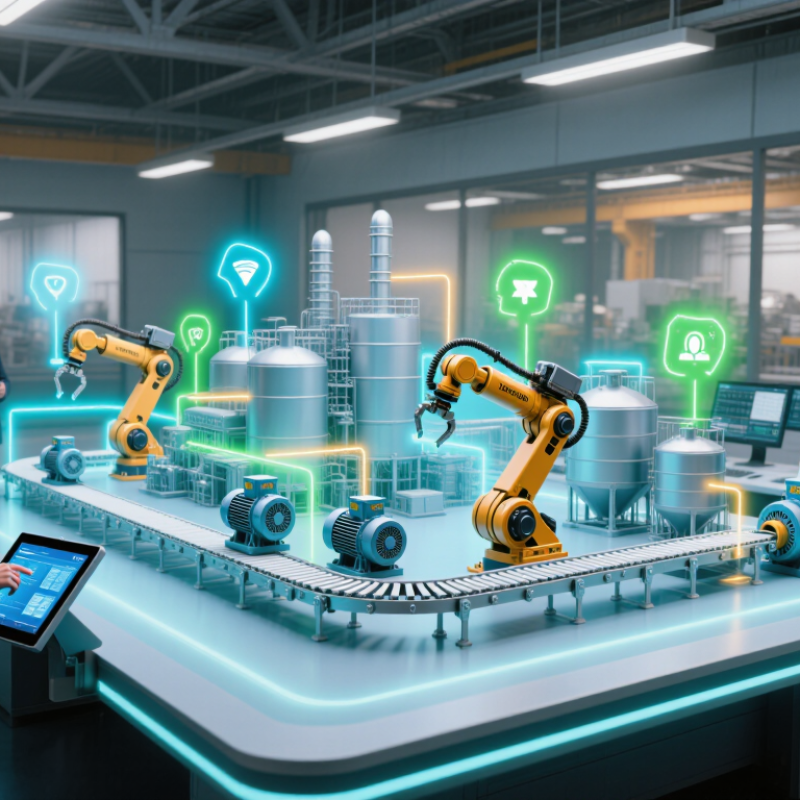
A digital twin is a digital representation of a physical asset, process, or system. It uses operational data to reflect how its real-world counterpart behaves. A factory might use one to track a motor’s temperature, vibration, and energy use. Changes appear in the model as new sensor readings arrive. That can help teams spot unusual patterns before a minor fault stops production.
Using digital twin technology starts with a clear question. A team might want to reduce downtime, test a design, or improve energy performance. It then selects reliable data sources, builds a model suited to the task, and checks the model against real measurements. Sensors are not magic. Gaps, delays, or inaccurate readings can make a digital twin misleading, so regular validation matters. The model may still miss something important.
What are the advantages of digital twin technology? It can support faster decisions, safer scenario testing, and more targeted maintenance. For example, engineers can compare operating settings in a simulation before changing a live production line. Managers may also use historical and current data to plan repairs around scheduled downtime. Results depend on data quality, model scope, and how people use the findings. A polished dashboard alone does not guarantee better decisions. Careful implementation, skilled review, and realistic expectations turn a digital twin into a practical tool rather than just another screen.
Set Scope: Gartner’s 2017 Forecast Put Industrial Twin Adoption at 50% by 2021
Set scope before connecting sensors. Gartner’s 2017 forecast predicted that 50% of large industrial companies would use digital twins by 2021, with a 10% effectiveness gain. This was a projection, not evidence that the target was met. It is still a useful planning signal: adoption alone does not define value. Capgemini Research Institute’s 2020 report found that 75% of surveyed organizations implementing the Internet of Things were using digital twins, but only 13% had scaled them. Pilots were common. Scale was harder.
Choose one asset and one decision. For a plant pump, the twin might track vibration, temperature, and operating hours to help maintenance teams spot wear before failure. Set a baseline first: unplanned downtime, inspection time, or energy use. Name who will act on an alert, and how quickly the model’s data must refresh. Keep the boundary narrow; a model that imitates an entire site can become expensive and difficult to validate. Small scope helps. Yet sensor gaps and changing operating conditions can make predictions unreliable, and teams sometimes trust a polished dashboard too quickly. Record what the twin cannot see, check its predictions against maintenance logs, and revise the model when reality disagrees.
Connect Sensors and Systems to Capture Live Asset Data
A digital twin starts with dependable signals, not a glossy 3D model. Fit sensors to assets such as pumps, motors, and valves, then stream temperature, vibration, pressure, and operating status into a shared data layer. Connect that feed with maintenance logs and control-system records. Use consistent timestamps and asset IDs; otherwise, a vibration spike may appear beside the wrong repair event. Small details matter.
A 2023 MarketsandMarkets industry forecast estimated the digital-twin market at $10.1 billion, rising to $110.1 billion by 2028. That is a market projection, not proof that every project pays off. For a practical start, track one asset’s live readings against its normal operating range. A technician might spot a bearing heating up before the next scheduled inspection. Useful, but not magic. Sensor drift, dropped connections, and stale records can make a twin confidently wrong. Check calibration, flag missing data, and show when a reading was last updated. Perfection is unrealistic; transparent uncertainty is more useful.
Build and Validate the Model with ISO 23247’s Manufacturing Framework
How to Use Digital Twin Technology and Its Benefits
Build and Validate the Model with ISO 23247’s Manufacturing Framework
A manufacturing digital twin is useful only when its data reflects the real machine. ISO 23247 offers a framework for connecting manufacturing entities, digital representations, data collection, and user applications. Start with one defined process, such as a milling cell, rather than modeling an entire factory. Specify which equipment, sensors, and operating conditions the model must represent. Keep the scope clear.
Then validate the model against observed production. Compare its outputs with timestamped readings for spindle temperature, vibration, cycle time, or part dimensions. Record sensor gaps and calibration changes; otherwise, a neat dashboard can hide unreliable inputs. ISO 23247 provides an architectural foundation, not a guarantee that a twin is accurate. A model can still be wrong.
The Capgemini Research Institute’s 2022 digital twins report found that 60% of surveyed organizations used twins to improve operational efficiency. That is a reported adoption aim, not proof of achieved savings. Teams should test a model against historical runs, then check it during live operation. Set acceptable error limits before deployment and review them when equipment or processes change. The awkward part: validation takes ongoing work, and some production data will remain incomplete. That limitation belongs in the model’s documentation, not in fine print.
How to Use Digital Twin Technology and Its Benefits
Build and Validate the Model with ISO 23247’s Manufacturing Framework
ISO 23247 is organized into four parts, covering general principles, reference architecture, digital representations of manufacturing elements, and information exchange. The bars show each part’s number in the standard—not performance scores. Together, these areas provide a structure for defining and validating a manufacturing digital twin and its data exchanges.
Integrate the Twin: Gartner Forecast a 10% Effectiveness Gain by 2021
How to Use Digital Twin Technology and Its Benefits
Gartner forecast a 10% effectiveness gain from integrating digital twins by 2021. That figure was a projection, not a guarantee or proof of results. A digital twin connects a physical asset or process to a changing digital model. For example, a factory team might compare a pump’s temperature, vibration, and operating schedule with its model. The goal is practical: spot a developing problem, test a change, and reduce avoidable downtime. Integration matters because isolated models cannot reliably reflect what is happening on the floor.
Tips: Start with one costly, measurable problem. Check that sensor readings are accurate and timely. Agree on a baseline before testing changes. Measure twice. A dashboard alone is not a twin.
A 10% gain depends on the task, data quality, and whether staff can act on what the model shows. Track a clear measure, such as maintenance hours or unplanned stoppages, before and after deployment. Keep a record of assumptions and model errors; a neat simulation can still miss a real-world constraint. The forecast is a useful prompt, but each organization must test the value for itself.
How to Use Digital Twin Technology and Its Benefits - Integrate the Twin: Gartner Forecast a 10% Effectiveness Gain by 2021
| Data Dimension |
Forecast or Finding |
Interpretation |
| Forecast horizon |
By 2021 |
The prediction described an expected outcome by this year, rather than a measured result for every organization. |
| Expected adoption |
50% of large industrial companies |
Gartner forecast that half of large industrial companies would be using digital twins by 2021. |
| Expected effectiveness gain |
10% improvement |
The forecast linked digital-twin use to a 10% improvement in effectiveness among adopting organizations. |
| Technology approach |
Digital representation connected to a physical asset or system |
Operational data can be used to monitor the physical counterpart, analyze its condition, and support decisions. |
| Potential operational uses |
Monitoring, simulation, and performance analysis |
These uses can help teams identify issues, test changes virtually, and make more informed maintenance or process decisions. |
| Measurement caveat |
Forecast, not a guaranteed outcome |
Actual results depend on data quality, integration, implementation, and how effectiveness is defined and measured. |
Source: Gartner forecast on digital-twin adoption and effectiveness, as referenced in the title. The figures are forecasts, not universal measured results.
Measure ROI Against MarketsandMarkets’ $110.1B Market Forecast for 2028
A digital twin is a living model of a physical asset, process, or site. Sensors feed it operating data, while engineers test changes before applying them in the real world. A factory might model one pump, then track energy use, temperature, and unplanned downtime across a full production line. Useful detail matters. A polished dashboard cannot fix poor sensor readings or incomplete maintenance records.
MarketsandMarkets forecasts that the digital twin market will reach $110.1 billion by 2028. Treat that figure as market context, not proof that any single project will pay off. To measure ROI, record a baseline before deployment: repair hours, energy costs, lost production, and software and integration expenses. Then compare results over a defined period. If a virtual maintenance test cuts pump failures, calculate the avoided repair and downtime costs against the project’s total cost. Keep the assumptions visible. They can be wrong. A forecast may also shift as adoption, technology, and reporting methods change. A small pilot, such as one production cell over six months, can reveal data gaps and unexpected costs before a wider rollout. Real savings are specific. The spreadsheet should admit that.
Conclusion
Digital twin technology creates a virtual model of a physical asset, process, or system and keeps it updated with information from connected sensors and existing software. Start by defining the scope: decide which asset or operation to represent, what questions the twin should help answer, and which data is needed. Next, connect relevant systems to capture live data, then build and validate the model using a structured manufacturing framework so its virtual behavior reflects real-world conditions.
Once integrated into daily operations, a digital twin can help teams monitor performance, identify inefficiencies, test changes, and make better-informed decisions before applying them in the physical environment. To understand what are the advantages of digital twin technology, measure outcomes such as improved effectiveness, reduced downtime, and more efficient resource use. Compare these results with implementation and maintenance costs, and review the business case over time as adoption grows and the technology market expands.

 Eeptron PLC