What is edge computing in industrial automation? It is a practical architecture that processes machine data near the equipment creating it. Instead of sending every sensor reading to a distant cloud, an industrial edge device analyzes selected data locally. A rugged gateway beside a conveyor can detect motor vibration, compare temperature readings, and trigger an alert within milliseconds. The production line keeps responding, even when internet access becomes unstable.
“The edge is the new cloud,” observes Mahadev Satyanarayanan, a pioneer in edge computing research. His insight helps explain the shift from centralized systems toward distributed decision-making. In a modern plant, programmable logic controllers, industrial PCs, sensors, and cloud platforms can share responsibilities. Local systems handle urgent control loops. Cloud services support broader analytics, maintenance planning, and historical reporting.
The value is measurable. Faster responses can reduce stoppages. Local processing can also limit unnecessary data transfers and support stronger data governance. However, edge computing is not a magic replacement for the cloud. Poor device management, inconsistent software updates, and weak network design can create new risks. I have seen how a small configuration error can produce misleading dashboards. That detail matters.
A reliable implementation needs secure access, time synchronization, equipment compatibility, and clear recovery procedures. Engineers should test failure conditions, not only normal operation. The technology remains imperfect. Yet, when designed around real production constraints, edge computing can connect operational experience with timely, trustworthy decisions. This guide explains the architecture, benefits, limitations, and practical use cases behind industrial edge systems.
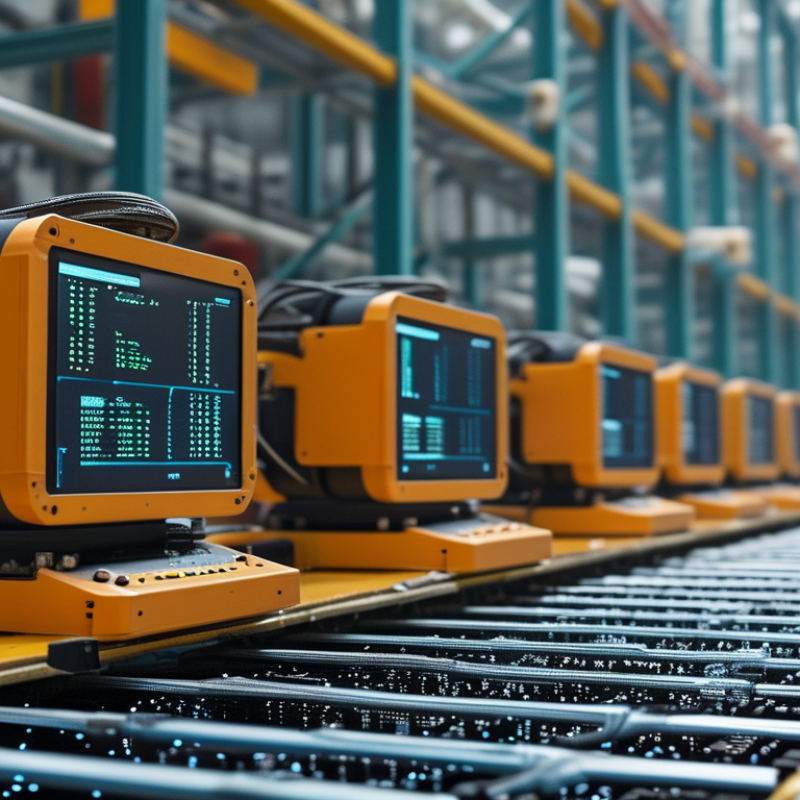
In industrial automation, edge computing means processing data near the machines that produce it, rather than sending every signal to a distant data center. A controller, gateway, or industrial computer can examine vibration, temperature, pressure, and cycle time beside the production line. This proximity reduces communication delay. A motor fault may trigger a local shutdown within milliseconds, even when the outside network is busy. The definition is practical: compute where the data has operational value.
A core principle is locality. Keep time-critical decisions close to sensors and actuators. Another is selective communication. An edge device can filter thousands of readings, retain useful events, and send summaries to higher systems. That saves bandwidth without hiding important evidence.
Autonomy also matters. The line should continue safely during a temporary connection failure. Not forever. Local rules need clear limits, tested fallback states, and human review.
Security and reliability must be designed into the edge layer. Devices need controlled access, signed software, accurate time records, and physical protection on the factory floor. Interoperability matters too; mixed controllers and sensors must exchange data through documented interfaces. During commissioning, a simple alarm often reveals more value than a complicated dashboard. Yet edge computing is not magic. Poor calibration produces confident errors, and local models can drift as machines age. Engineers should test real failure cases, record uncertainty, and question whether each automated action remains justified.
In industrial automation, edge computing places processing resources close to machines, sensors, and controllers. Its architecture begins at the device layer, where temperature probes, vibration sensors, drives, and programmable controllers produce continuous signals. An industrial edge node collects these signals through suitable protocols, filters noise, and converts raw values into usable events. This reduces traffic to central servers and keeps urgent decisions near the production line. A stopped motor can trigger a local interlock within milliseconds, even when an external connection is unavailable. That detail matters during maintenance and network disruption.
Above the device layer, the edge layer performs analytics, rule execution, buffering, and protocol translation. It may compare motor vibration with a defined baseline and identify abnormal patterns. A reliable design separates control logic from monitoring functions. This prevents a dashboard failure from affecting a safety-related response. Time synchronization, access control, encrypted communication, and signed software updates support trustworthy operation. Local storage preserves readings during temporary outages and forwards them after connectivity returns. Engineers must test these behaviors under heat, dust, electrical noise, and heavy workloads.
The upper architecture connects edge nodes with plant servers or approved cloud environments. It supports production analysis, model training, reporting, and long-term records without moving every signal continuously. Edge systems are not automatically perfect. Poor sensor calibration can produce confident but false alerts. Complex rules can hide simple mechanical problems. Experienced teams review thresholds, document assumptions, and schedule controlled tests. The architecture should evolve with the process, not merely add another computer beside it.
Industrial edge systems move computation closer to machines, sensors, and operators. Gartner predicted that 75% of enterprise-generated data would be created and processed outside traditional data centers by 2025. In manufacturing, this shift reduces delays when a robotic arm needs an immediate stop. Latency matters. Local processing also keeps production data available during temporary network outages.
Several technologies make this possible. Industrial gateways collect signals from controllers, cameras, and vibration sensors. Protocols such as OPC UA and MQTT help different devices exchange structured data. Time-sensitive networking supports predictable communication for motion control. Containerized software allows teams to update analytics without replacing entire control systems. Meanwhile, edge AI can detect bearing wear from acoustic patterns within milliseconds. The 2024 IoT Analytics State of IoT report estimated that connected IoT devices would exceed 17 billion globally, increasing pressure for scalable local intelligence.
Security remains a practical concern, not a decorative feature. Hardware-based identity, encrypted communication, network segmentation, and signed software updates protect distributed nodes. Digital twins can test process changes before operators apply them to live equipment. Yet edge projects often underestimate maintenance. A forgotten gateway certificate can stop a healthy line. Poor sensor calibration can also train an accurate model on inaccurate evidence. Industrial teams should measure latency, uptime, energy use, and false alarms continuously. The architecture is powerful, but it still needs disciplined human review.
| Technology or Data Dimension | Primary Role in Industrial Edge Systems | Typical Technical Characteristics | Industrial Automation Use Cases | Key Benefits | Important Considerations |
|---|---|---|---|---|---|
| Industrial Edge Computing | Processes operational data close to machines, sensors, and control equipment instead of sending all data to a remote data center. | Local processing: milliseconds to seconds, depending on workload and network design. | Machine monitoring, local analytics, production-line optimization, and alarm handling. | Lower bandwidth usage, faster responses, improved resilience during wide-area network interruptions. | Requires suitable computing hardware, thermal management, system maintenance, and cybersecurity controls. |
| Programmable Logic Controllers | Executes deterministic control logic for machines and production processes. | Designed for continuous operation, industrial I/O, predictable scan cycles, and real-time control. | Sequencing, motion coordination, interlocking, conveyor control, and process regulation. | High reliability, deterministic behavior, and direct integration with field devices. | Safety-critical functions should remain within certified control and safety architectures rather than relying solely on general-purpose edge software. |
| Industrial Internet of Things Sensors | Collects physical and operational measurements from equipment and processes. | Common measurements include temperature, vibration, pressure, current, flow, position, and acoustic signals. | Condition monitoring, energy measurement, asset tracking, and quality inspection. | Improves equipment visibility and provides data for predictive maintenance and optimization. | Sensor calibration, sampling rate, signal quality, installation location, and data synchronization affect analytical accuracy. |
| Time-Sensitive Networking | Provides more predictable Ethernet communication for time-critical industrial traffic. | Uses mechanisms such as traffic scheduling, time synchronization, and bounded latency. | Coordinated motion, robotics, machine-to-machine communication, and converged industrial networks. | Improves timing consistency and can support the convergence of operational and standard Ethernet traffic. | Requires compatible network infrastructure, configuration discipline, and accurate time synchronization. |
| Industrial Communication Protocols | Transfers process data, commands, alarms, and diagnostic information between devices and applications. | Examples include OPC UA, MQTT, Modbus TCP, and real-time Ethernet protocols. | Device integration, supervisory monitoring, data exchange, and edge-to-cloud communication. | Enables interoperability across sensors, controllers, gateways, and software applications. | Protocol selection should consider determinism, security, data modeling, bandwidth, interoperability, and legacy equipment support. |
| Edge Gateways | Connects field equipment to local applications, supervisory systems, and higher-level platforms. | Often supports protocol conversion, buffering, filtering, aggregation, and secure data forwarding. | Retrofitting legacy machines, collecting data from multiple protocols, and connecting isolated production cells. | Reduces integration complexity and limits the amount of raw data transmitted upstream. | Gateway failure can create a local dependency; redundant designs and secure configuration management may be required. |
| Containerized Edge Applications | Packages analytics, integration services, and machine-learning workloads for deployment on edge hardware. | Provides process isolation, repeatable deployment, version control, and resource management. | Local dashboards, anomaly detection, data transformation, and production-data services. | Supports modular software updates and simplifies deployment across similar production environments. | Containers do not automatically provide real-time guarantees; resource limits, image security, and lifecycle management are essential. |
| Real-Time Data Processing | Analyzes incoming machine and process data while operations are taking place. | Uses stream processing, event detection, threshold evaluation, and time-window calculations. | Instant alarms, process deviation detection, throughput analysis, and quality control. | Enables rapid intervention and reduces dependence on delayed batch reports. | Accurate timestamps, event ordering, buffering strategy, and data-loss handling are important for reliable results. |
| Artificial Intelligence at the Edge | Runs trained machine-learning models near the source of operational data. | Common methods include classification, regression, anomaly detection, and computer vision inference. | Visual inspection, defect detection, predictive maintenance, and process optimization. | Reduces data transfer, supports low-latency decisions, and can keep sensitive operational data local. | Model drift, training-data quality, explainability, hardware acceleration, and human validation must be managed. |
| Time-Series Databases | Stores measurements indexed by time for analysis, visualization, and historical comparison. | Optimized for timestamped records, retention policies, downsampling, and high-ingest workloads. | Trend analysis, energy monitoring, maintenance history, and production performance tracking. | Provides efficient access to operational histories without retaining every raw signal indefinitely. | Retention periods, clock synchronization, compression, backup strategy, and query performance should be defined in advance. |
| Digital Twins | Represents a physical asset, process, or production line through synchronized digital models and operational data. | May combine equipment state, engineering information, simulation, rules, and live sensor data. | Commissioning, process simulation, what-if analysis, maintenance planning, and operator training. | Improves understanding of asset behavior and supports informed operational decisions. | The model is only as reliable as its data, assumptions, update frequency, and validation process. |
| Cybersecurity Controls | Protects edge devices, industrial networks, applications, and operational data from unauthorized access or disruption. | Includes network segmentation, secure boot, identity management, encryption, patching, logging, and least-privilege access. | Protection of production cells, remote service access, device authentication, and incident investigation. | Reduces attack surfaces and supports the availability and integrity of industrial operations. | Security changes must be tested carefully because poorly timed updates can affect production continuity or safety. |
| Cloud-to-Edge Coordination | Combines local operational responsiveness with centralized storage, fleet management, and advanced analysis. | Edge systems commonly filter, aggregate, and forward selected data while retaining local control functions. | Multi-site performance comparison, model distribution, centralized reporting, and long-term optimization. | Balances low-latency local decisions with broader enterprise visibility and scalable management. | Requires clear data ownership, synchronization rules, connectivity planning, and offline operating procedures. |
| Operational Reliability | Ensures that edge applications continue supporting production during equipment faults or network interruptions. | Uses local buffering, watchdogs, redundancy, graceful degradation, and recovery procedures. | Continuous monitoring, alarm processing, local control support, and critical data retention. | Improves continuity and reduces the impact of temporary connectivity or upstream service failures. | Reliability targets, recovery time objectives, spare-parts planning, and maintenance responsibilities should be documented. |
Edge computing brings data processing closer to industrial machines. Instead of sending every signal to a distant cloud, local gateways analyze information near the production line. This reduces delay during critical operations. A robotic arm can stop within milliseconds after detecting an unsafe movement. A packaging machine can also adjust speed when sensors reveal vibration or product misalignment. In practice, this supports faster decisions and more stable production.
Industrial automation applications include predictive maintenance, machine vision, energy monitoring, and quality inspection. For example, edge software can compare motor temperature and vibration against normal operating patterns. Maintenance teams receive an early warning before a bearing fails. Cameras can inspect labels, dimensions, or surface defects without uploading every image. This protects bandwidth and helps operators respond quickly. However, edge systems are not flawless. Poor sensor calibration may create false alarms. A rushed deployment can also hide problems instead of solving them.
Tips: Start with one measurable process. Track downtime, response time, and rejected products. Keep local controls safe and independent. Review alerts with experienced technicians before changing machine settings. Test offline behavior, because network connections can fail. Edge computing works best when engineers understand both the equipment and its data. Small mistakes matter.
Edge computing places data processing near machines, sensors, and control systems. This reduces the distance between an event and an operational response. A temperature sensor can trigger cooling within milliseconds, without waiting for a remote server. On a packaging line, that delay may prevent damaged products and unnecessary stoppages. Local processing also reduces bandwidth use and keeps essential functions running during network interruptions. Operators gain faster alerts from vibration, pressure, and energy readings.
The challenges are practical. Many factories still use legacy controllers with limited interfaces. Integrating them requires careful testing and sometimes custom gateways. Edge devices also need updates, backups, and physical protection. A neglected device can become a silent failure point. Staff may understand production well but lack cybersecurity training. That gap is easy to underestimate. Data quality creates another problem; a poorly calibrated sensor can produce confident, useless decisions. The calculation is rarely perfect.
Security should begin with a complete asset inventory. Each device needs a unique identity, restricted permissions, and encrypted communication. Network segmentation can limit damage if one device is compromised. Secure boot, signed updates, and tamper-evident enclosures strengthen the edge layer. Logs should record access, configuration changes, and unusual traffic. Regular patching matters, but patches must be tested against real production conditions. A rushed update can interrupt a critical process. Emergency controls should allow safe manual operation when software, connectivity, or sensor readings become unreliable.
: It places computing near machines, sensors, and controllers. Local nodes process signals before sending selected data elsewhere. This reduces delay and network traffic.
The device layer collects temperature, vibration, camera, and controller signals. The edge layer filters data, runs rules, stores readings, and translates protocols. Plant servers support analysis, reporting, and long-term records.
Yes. Local controls can continue operating when external connections fail. A stopped motor may trigger an interlock within milliseconds. Stored readings can transfer after connectivity returns.
Industrial gateways connect machines and sensors. Structured communication protocols help different devices exchange data. Time-sensitive networking supports predictable motion control. Containerized software enables smaller updates.
Common uses include predictive maintenance, machine vision, energy monitoring, and quality inspection. A camera can detect surface defects locally. Vibration data can warn about bearing wear.
Local processing can detect unsafe movement quickly. It can stop a robotic arm or adjust a packaging machine. Monitoring functions should remain separate from control logic. A failed dashboard should not disable a safety response.
Use hardware-based identity, encrypted communication, network segmentation, and signed software updates. Manage certificates carefully. One forgotten certificate can interrupt a healthy production line.
Poor sensor calibration can create confident but false alerts. Complex rules may hide simple mechanical faults. Teams should review thresholds with experienced technicians. We may still miss problems.
Start with one measurable process. Track downtime, response time, energy use, and rejected products. Test offline behavior under heat, dust, electrical noise, and heavy workloads. Small mistakes matter.
What is edge computing in industrial automation? It is a distributed computing approach that processes data close to machines, sensors, and control systems instead of sending every piece of information to a distant data center. Its core principles include low latency, local decision-making, efficient bandwidth use, and continuous operation even when connectivity is limited. An industrial edge architecture typically connects field devices, controllers, local gateways, and analytical software, creating a responsive link between physical processes and digital intelligence.
Key technologies such as industrial networks, sensor integration, real-time analytics, artificial intelligence, virtualization, and secure device management enable these systems. Industrial edge computing can support predictive maintenance, quality inspection, process optimization, energy management, and autonomous control. Its benefits include faster responses, improved reliability, reduced data transmission costs, and greater operational visibility. However, organizations must address challenges involving system integration, scalability, maintenance, data governance, and cybersecurity. Strong authentication, encryption, network segmentation, software updates, and careful access control are essential for protecting connected industrial operations.

Eeptron PLC