How to Choose an Industrial IoT Platform in 2026?

Time:2026-10-17 Author:Liam
0%

Choosing an Industrial IoT platform in 2026 is no longer a software branding exercise. It is an operational decision affecting production, maintenance, cybersecurity, and investment confidence. IoT Analytics reported approximately 18.8 billion connected IoT devices worldwide in 2024. Industrial sites are becoming denser, more connected, and harder to manage manually. A platform must therefore convert machine signals into trusted operational decisions.

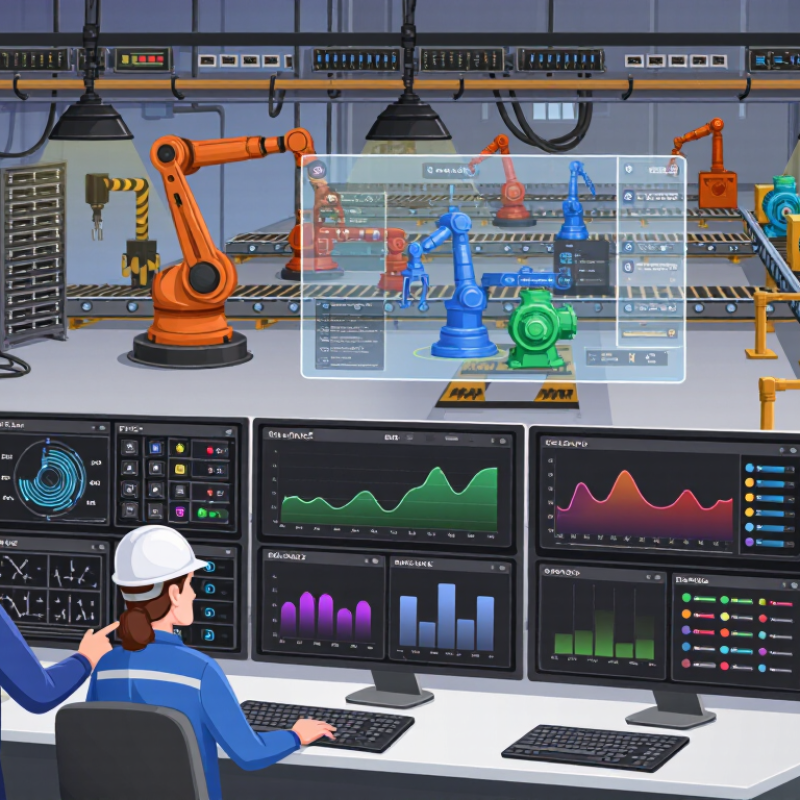
The practical question is: what are the key components of an industrial iot platform? They usually include secure device connectivity, edge computing, data ingestion, time-series storage, analytics, digital twins, application development, and integration with systems such as MES, ERP, and SCADA. Each component should support measurable outcomes. For example, an engineer should see a motor’s vibration trend, alarm history, and maintenance status without switching between five screens. The platform should also handle legacy protocols, intermittent connectivity, and strict access controls. These details often decide whether a pilot survives beyond the demonstration stage.

Industry research supports careful selection. McKinsey estimates that IoT could generate between $5.5 trillion and $12.6 trillion in annual economic value by 2030. However, value is not automatic. Microsoft’s IoT Signals research found that many organizations still struggle with technical complexity, skills gaps, and security concerns. That warning remains relevant. No platform fits every factory. Cloud-first architectures may reduce infrastructure effort, while edge-heavy designs can protect latency-sensitive operations. The better choice depends on plant conditions, workforce capability, data governance, and five-year integration costs. A smaller deployment may reveal more truth than a polished sales presentation. Mistakes are possible, especially when promised interoperability is tested against old equipment.
How to Choose an Industrial IoT Platform in 2026?

What an Industrial IoT Platform Is and What It Does

An industrial IoT platform is the software layer connecting machines, sensors, operators, and business systems. It collects machine data, cleans inconsistent signals, and turns readings into usable decisions. Not just a dashboard. IoT Analytics reported 16.6 billion connected IoT devices worldwide in 2023, increasing pressure on factories to manage data at scale. A capable platform supports device registration, remote monitoring, event processing, visualization, and secure data storage. It should also expose APIs for maintenance, quality, and production applications.

Consider a packaging line producing unusual vibration readings. The platform can filter noise at the edge, compare values with historical patterns, and alert an engineer before failure. Latency matters. Local processing helps when cloud connectivity is unstable. Protocol support, such as MQTT or OPC UA, improves interoperability across older and newer equipment. However, integration rarely feels clean. Sensor labels may differ, timestamps may drift, and some assets may lack reliable documentation.

When comparing platforms in 2026, examine the complete data path, from sensor ingestion to operational action. Check role-based access, audit logs, encryption, retention controls, and scaling costs. McKinsey Global Institute estimated that industrial IoT could create substantial economic value across factories and other settings, but value depends on execution, not installation alone. A platform cannot repair weak data governance. It also cannot replace experienced technicians. The better choice makes their judgment faster, clearer, and easier to verify.

Core Capabilities to Assess in an IIoT Platform

How to Choose an Industrial IoT Platform in 2026?

Core capabilities should guide an IIoT platform decision, not attractive dashboards. McKinsey Global Institute estimates that IoT could create $5.5 trillion to $12.6 trillion in annual value by 2030. That value depends on reliable data movement. The platform should connect legacy controllers, sensors, gateways, and cloud services through open protocols. It also needs device identity, remote configuration, firmware control, and clear data ownership.

Interoperability matters.

Security must operate at every layer. Look for encrypted communication, role-based access, vulnerability monitoring, and detailed audit logs. NIST’s Cybersecurity Framework 2.0 emphasizes governance, identification, protection, detection, response, and recovery.

These functions should appear in daily workflows, not only in compliance documents. Test them during a factory pilot. A polished demo proves little.

Analytics capability is equally important. The platform should process time-series data at the edge, reduce unnecessary transfers, and support alerts with practical thresholds. It should connect machine events with production, maintenance, quality, and energy records.

According to the International Energy Agency, industry accounted for roughly 37% of global final energy consumption in 2022. Energy visibility can therefore become a measurable business case.

I have seen teams overvalue artificial intelligence and undervalue data quality. That mistake is expensive. Start with one production line, measure latency and false alerts, then expand only when operators trust the results.

How to Match Platform Features to Industrial Use Cases

Choosing an industrial IoT platform starts with the factory problem, not the feature list. A machine-heavy plant may need vibration sensors, edge analytics, and automatic alerts. A food facility may prioritize traceability, temperature records, and rapid audit access. The platform must connect older equipment without forcing expensive replacement. That detail often decides success.

IoT Analytics reported about 16.6 billion connected IoT devices worldwide in 2023. Industrial adoption is growing, but connectivity alone creates little value.

The International Energy Agency states that industry uses about 37% of global energy. Therefore, energy monitoring can be a stronger first use case than broad data collection. Check protocol support, data ownership, cybersecurity controls, offline operation, and integration with maintenance systems. Test one production line under real conditions. My own caution: dashboards can look impressive while operators still rely on paper notes. That gap deserves attention.

Tips: Map each feature to one measurable outcome. For predictive maintenance, track downtime avoided. For energy management, measure kilowatt-hours per unit produced. Ask operators to test alerts during a noisy shift. Keep the pilot small. A platform may pass a technical demo and still fail beside a hot, crowded machine. Use independent security assessments and published service-level data. Treat vendor claims as hypotheses, not evidence.

How to Evaluate Security, Scalability, and Interoperability

Choosing an Industrial IoT Platform in 2026

Security should be tested in real operating conditions, not only reviewed in sales documents. Check device identity, certificate rotation, encryption, role-based access, and detailed audit logs. Ask how quickly the platform detects unusual traffic and isolates a compromised device. Patch management also matters. A neglected gateway can weaken an otherwise strong architecture. In one factory assessment, access permissions looked correct until contractors retained unnecessary privileges after a project ended.

Scalability requires measurable evidence. Request load-test results for devices, messages, storage, and dashboards. Confirm whether edge systems can buffer data during network outages. The platform should expand without forcing a complete redesign. Interoperability is equally practical. Look for support for open communication protocols, standard data models, documented APIs, and exportable records. A platform may connect easily today but create costly data silos later. This risk is often underestimated.

Tips: Test failure recovery. Simulate certificate expiry, network loss, and sudden device growth. Ask for independent security reports and clear update responsibilities. Compare performance across different device types, not only laboratory equipment. Keep evaluation notes and challenge optimistic assumptions. No platform is perfect. Your team may also overlook ordinary issues, such as poor sensor calibration or unclear ownership of alerts. A short pilot with production-like data can reveal these weaknesses before deployment.

How to Compare Costs, Vendors, and Long-Term Platform Value

Choosing an Industrial IoT platform in 2026 requires more than comparing subscription prices. IoT Analytics estimates that connected IoT devices reached 18.8 billion in 2024. That scale increases pressure on data processing, integration, and cybersecurity budgets. Compare five-year total cost of ownership, including sensors, gateways, cloud usage, training, support, and migration. The cheapest license may become expensive after deployment.

Vendor evaluation should test operational evidence, not polished demonstrations. Ask for uptime records, security certifications, API documentation, and customer retention data. Deloitte’s 2024 Smart Manufacturing survey found that 86% of manufacturing leaders consider smart manufacturing important to competitiveness. Yet implementation maturity remains uneven. Request a live trial using one production line. Measure latency, dashboard accuracy, maintenance alerts, and operator adoption. Pilot it.

Long-term value depends on flexibility. A platform should support different protocols, expand across plants, and export data without unreasonable restrictions. NIST guidance emphasizes risk management throughout a system’s lifecycle, not only during installation. Review patching practices, identity controls, incident response, and data ownership in the contract. Financial models should include avoided downtime and improved asset utilization, but these benefits need baseline evidence. A spreadsheet can still lie. Teams often underestimate internal integration work, and that mistake deserves honest attention. A platform with fewer features may create higher value when workers can use it reliably. Compare vendors quarterly, not once.

FAQS

What is an industrial IoT platform?

It connects machines, sensors, operators, and business systems. It collects readings and turns them into useful decisions. Not just dashboards.

What can an industrial IoT platform monitor?

It can track vibration, temperature, energy use, production status, and equipment events. For example, unusual vibration may trigger an engineer’s alert.

Why is edge processing important?

Edge processing analyzes data near the machine. It can reduce delays when cloud connectivity becomes unstable. Faster responses matter.

How should a factory match features to its needs?

Start with one measurable problem. A machine-heavy plant may need vibration alerts. A food facility may need temperature records and traceability.

Can older equipment connect to the platform?

Often, yes. Check protocol support and gateway options before purchasing. Older machines may have unclear labels or incomplete documentation.

How should a company test a platform?

Run a small pilot on one production line. Measure alert accuracy, response time, data quality, and operator adoption. Test during a noisy shift.

What costs should be included?

Include sensors, gateways, cloud usage, training, support, migration, and integration work. A low subscription price may hide larger deployment costs.

How can long-term value be measured?

Compare avoided downtime, energy use per unit, and improved equipment utilization. Establish baseline data first. Spreadsheets can still mislead.

What security and governance features deserve attention?

Review role-based access, encryption, audit logs, patching, retention, and incident response. Confirm who owns exported data. Contracts need careful review.

Can a platform replace experienced technicians?

No. It can make their judgment faster and easier to verify. Alerts still require context, and some alerts may be wrong.

Conclusion

Choosing an Industrial IoT platform in 2026 requires more than comparing feature lists. An IIoT platform connects machines, sensors, applications, and people so industrial organizations can collect data, monitor operations, analyze performance, and support timely decisions. When asking “what are the key components of an industrial iot platform,” consider device connectivity, data ingestion, edge processing, cloud or on-premises infrastructure, visualization, analytics, automation, and system management. These capabilities should align with practical use cases such as predictive maintenance, production monitoring, quality control, energy optimization, and asset tracking.

A strong evaluation should also examine security controls, identity management, data protection, scalability, reliability, and interoperability with existing equipment and business systems. Organizations should assess whether the platform can support future devices, sites, workloads, and regulatory requirements without excessive complexity. Finally, compare licensing models, implementation costs, support services, vendor stability, customization needs, and long-term ownership value. The best choice is not necessarily the platform with the most features, but the one that delivers measurable operational benefits while remaining secure, adaptable, and financially sustainable.

Liam

Liam

Liam is a dedicated marketing professional with a profound expertise in the industry, where he excels at highlighting the unique advantages of our core products. With a keen understanding of market trends and consumer needs, Liam frequently updates our company’s professional blog, providing......