2026 Top Automation Types to Improve Production Efficiency?

Time:2026-10-27 Author:Sienna
0%

As manufacturers plan for 2026, production efficiency depends on more than buying faster machines. The practical question is how to improve production line efficiency with automation without creating new bottlenecks. A successful line may combine industrial robots, collaborative robots, machine vision, automated guided vehicles, and real-time production software. Each technology solves a different problem. Robots can handle repetitive loading. Vision systems can detect surface defects within seconds. Sensors can reveal overheating motors before an unexpected stoppage.

Automation is not a magic switch. W. Edwards Deming, a leading quality-management expert, warned, “Automation applied to an inefficient operation will magnify the inefficiency.” His statement remains highly relevant. A manufacturer should measure cycle time, changeover losses, scrap, unplanned downtime, and operator movement before selecting equipment. Otherwise, an expensive system may simply move waste faster.

Small details often decide the result. A poorly positioned sensor can produce false alarms. An untrained operator may bypass a useful interface. A rigid robot cell may struggle when product variants increase. These weaknesses are easy to overlook. They also make the evaluation more realistic.

This guide examines the top automation types expected to improve production efficiency in 2026. It considers robotics, cobots, machine vision, industrial IoT, predictive maintenance, digital twins, and autonomous material handling. The focus stays practical: installation requirements, measurable benefits, integration risks, and suitable production environments. Some assumptions will fail. That is acceptable. Reliable improvement comes from testing, reviewing data, and refining the line step by step.
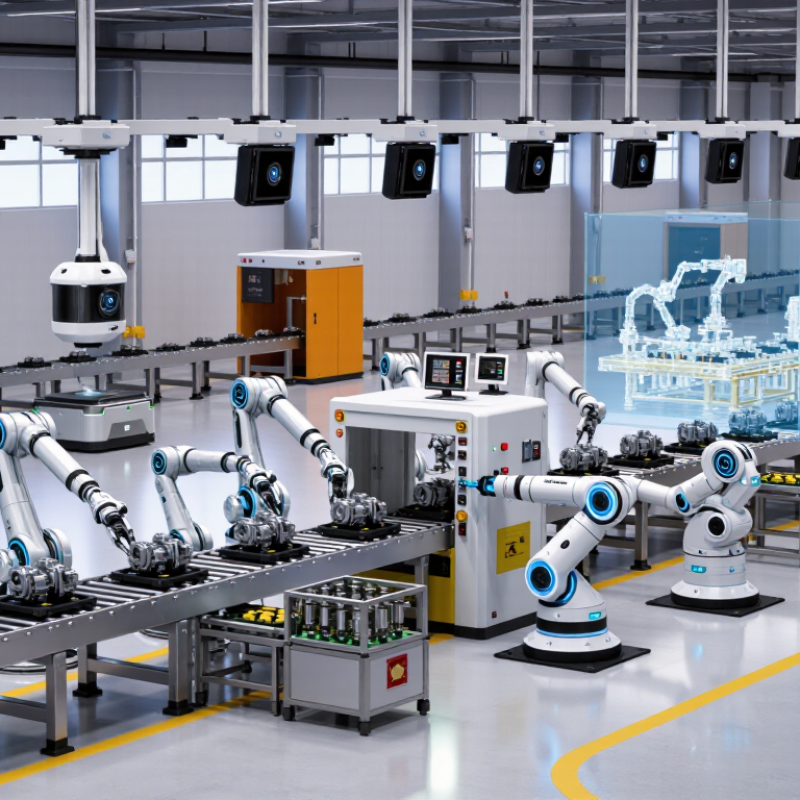
2026 Top Automation Types to Improve Production Efficiency?

What Production Automation Means and Why It Matters in 2026

2026 Top Automation Types to Improve Production Efficiency?

Production automation means using connected machines, software, sensors, and people to perform repeatable production tasks with greater consistency. It is not only about robotic arms. Automated inspection, machine vision, production scheduling, material handling, and predictive maintenance also matter.

The International Federation of Robotics reported 541,302 industrial robots were installed worldwide in 2023. The global operational stock exceeded 4.28 million units. These figures show how automation is becoming normal factory infrastructure, not a distant experiment. The World Economic Forum’s Future of Jobs Report 2025 found that 58% of employers expect robotics and autonomous systems to transform business by 2030. That shift affects small workshops, too.

Start with a bottleneck. A sensor can detect abnormal vibration before a spindle fails. A vision system can identify a scratched surface under consistent lighting. Automated guided vehicles can move bins across a factory floor, while production software adjusts schedules when orders change. The results may include fewer errors, shorter cycle times, and safer repetitive work.

But automation is not automatically efficient. Poor data creates poor decisions. Workers may also need months of practical training. In my experience, a simple automated station often creates more value than an expensive, poorly integrated system. Deloitte’s 2024 Smart Manufacturing and Operations Survey reported that 86% of manufacturing executives view smart manufacturing as a major competitiveness driver within five years.

The harder question remains: are factories improving processes, or only buying technology?

How Robotic Automation Handles Repetitive Manufacturing Tasks

2026 Top Automation Types to Improve Production Efficiency?

How Robotic Automation Handles Repetitive Manufacturing Tasks

Robotic automation is changing repetitive manufacturing work on the factory floor. A six-axis robot can pick a metal part, rotate it, and place it into a fixture for hours. Vision systems check orientation, surface defects, and missing components. This reduces fatigue during dull, high-volume tasks. The International Federation of Robotics reported 541,302 industrial robot installations worldwide in 2023. More than 4.28 million robots were operating across factories.

The strongest results usually come from simple, repeatable processes. Robots can handle palletizing, machine tending, welding, dispensing, and packaging with consistent motion. They also collect cycle-time data for engineers. In the World Economic Forum’s Future of Jobs Report 2025, 58% of employers identified robotics and automation as major business transformation drivers by 2030. That signal matters, but installation figures alone do not prove efficiency.

A poorly designed cell can create new delays. Parts may arrive crooked. A gripper may slip. Operators still need safe access, clear alarms, and practical training. Small tests help reveal these weaknesses before full deployment. One overlooked changeover can erase expected gains. Human judgment remains important when materials vary or quality problems appear. The robot repeats perfectly. It also repeats a bad instruction perfectly.

How AI-Powered Systems Improve Production Decisions

Automation in 2026 is becoming more decision-focused. AI-powered systems connect sensors, production software, and operator feedback. They turn machine data into practical production choices.

A dashboard may flag rising motor vibration before a breakdown occurs. A scheduling engine may shift orders when material delivery changes.

Machine vision can inspect small defects at line speed. Predictive maintenance can recommend a service window during a planned pause.

Smart robots can adjust movement when product dimensions vary slightly. These tools reduce guesswork, but they need clean data and clear operating rules.

Poor sensor calibration can create confident but incorrect alerts. That risk is easy to underestimate.

In pilot production lines, teams should compare AI recommendations with experienced supervisors. A human may notice an unusual sound that sensors miss. AI can then learn from that correction, improving future decisions.

Production managers also need traceable records showing why a schedule changed or a machine stopped. This supports accountability and safer operations.

AI is not a crystal ball.

It sometimes favors efficiency over flexibility. A model may also miss rare failures because historical data contains too few examples.

Regular audits, staff training, and small controlled trials help expose these weaknesses. Better decisions come from cooperation between intelligent systems and people who understand the process.

How Connected Machines Enable Real-Time Process Control

2026 Top Automation Types to Improve Production Efficiency?

How Connected Machines Enable Real-Time Process Control

Connected machines are becoming central to modern production control. Sensors capture temperature, pressure, vibration, and cycle time. These signals move through industrial networks to local controllers or edge computers. Operators can then view process conditions within seconds, not hours later.

Real-time control improves more than speed. It helps teams detect unusual motor vibration before a stoppage occurs. It can also adjust filling, cutting, or heating parameters during production. A clear dashboard shows machine status, alarm history, and energy use. Small details matter here. A delayed sensor reading can create defective batches.

Automation works best when data remains trustworthy. Teams should calibrate sensors, test alarm limits, and record every control change. Access permissions also reduce accidental adjustments. Connected machines need secure network separation and regular software checks. These practices support reliable decisions and easier audits.

Still, the design is not flawless. A machine may report normal conditions while a sensor slowly drifts. Operators can also trust dashboards too quickly. Human review remains necessary, especially during unusual production changes. Good automation supports skilled workers; it does not remove their judgment. When systems share accurate data, robotic cells, predictive maintenance tools, and process controllers can respond as one coordinated operation.

How Flexible Automation Supports Scalable Smart Factories

2026 Top Automation Types to Improve Production Efficiency?

How Flexible Automation Supports Scalable Smart Factories

Flexible automation helps factories handle changing orders without rebuilding every production line. Modular robots, smart conveyors, and programmable inspection systems can switch tasks through software and simple tooling changes. A single cell might assemble small parts in the morning and package larger units after lunch. This adaptability supports growth when demand is uncertain. It also reduces idle equipment and shortens changeover time.

In practical factory projects, the strongest results come from connecting machines with production data. Sensors can track cycle time, temperature, errors, and material movement. Supervisors then see delays before they become expensive stoppages. Human judgment still matters. Operators understand unusual sounds, awkward handling, and quality issues that sensors may miss. Automation should support that knowledge, not quietly replace it. Some factories overinvest in equipment before checking workflow problems. That mistake can make a fast machine feed a slow process.

Tips: Start with one repetitive bottleneck. Measure its cycle time for several shifts. Choose modular equipment with accessible controls. Train operators before launch. Keep a manual fallback during early testing. Review energy use and maintenance hours every month. Do not expect perfect data immediately. Real production is messy. Scrap records may be incomplete, and workers may need time to trust new systems. Adjust the design after observing actual use, not only simulation results.

FAQS

Which manufacturing tasks are suitable for robotic automation?

Robots suit repetitive tasks like palletizing, machine tending, welding, dispensing, and packaging. They repeat programmed movements consistently. Simple processes usually deliver better results.

How can robots reduce worker fatigue?

A robot can lift, rotate, and place parts for hours. This reduces exposure to dull, high-volume movements. People can focus on supervision and unusual problems.

Can robotic automation improve product quality?

Vision systems can check orientation, surface defects, and missing components. Consistent motion may reduce variation. However, poor instructions can repeat defects perfectly.

How do connected machines support real-time control?

Sensors measure temperature, pressure, vibration, and cycle time. Local systems process these signals within seconds. Operators can see alarms and unusual conditions sooner.

What problems can real-time monitoring detect?

It may reveal unusual motor vibration before a stoppage. It can also identify delayed sensors or changing process conditions. Dashboards are useful, but not magical.

Why is sensor accuracy important in automated production?

A drifting sensor may report normal conditions incorrectly. Teams should calibrate sensors and test alarm limits regularly. Data errors can create defective batches.

How does flexible automation support changing production needs?

Modular robots, smart conveyors, and programmable inspection systems can switch tasks. A cell might assemble parts before packaging larger units. Tooling changes still require planning.

What should a factory do before full automation deployment?

Start with one repetitive bottleneck. Measure cycle times across several shifts. Run small tests, train operators, and keep a manual fallback.

What common mistake reduces automation benefits?

Some factories buy fast equipment before fixing workflow problems. A robot may feed a slow process. Review actual use, energy consumption, and maintenance hours.

Conclusion

In 2026, production automation is becoming a practical foundation for improving efficiency, consistency, and responsiveness in modern manufacturing. It combines robotic systems, artificial intelligence, connected machinery, and flexible production technologies to reduce repetitive manual work, minimize errors, and make better use of time and resources. Understanding how to improve production line efficiency with automation begins with identifying bottlenecks, selecting suitable automated processes, and creating a system that can adapt to changing production needs.

Robotic automation can manage repetitive tasks such as handling, assembly, inspection, and packaging, while AI-powered systems analyze production data to support faster and more accurate decisions. Connected machines provide real-time visibility into equipment performance, product quality, and workflow conditions, allowing teams to respond quickly to disruptions. Flexible automation further supports scalable smart factories by enabling equipment and processes to adjust for different products, volumes, and operational requirements. Together, these automation types help manufacturers build safer, more efficient, and more adaptable production environments.

Sienna

Sienna

Sienna is a skilled marketing professional with a deep expertise in our company’s core products and services. With a passion for innovation and detail, she plays a pivotal role in crafting insightful blog posts that not only highlight the unique features of our offerings but also provide valuable......