In 2026, maintenance teams face rising equipment costs, stricter safety expectations, and constant pressure to reduce downtime. A failed pump can stop production, spoil materials, and expose workers to avoidable risks. The right maintenance strategy matters.
Many managers still ask, “what is the difference between preventive and predictive maintenance?” Preventive maintenance follows a schedule, such as replacing a filter every three months. Predictive maintenance uses equipment data, including vibration, temperature, oil quality, and energy use. These signals help teams repair assets before failure becomes visible. Neither method fits every machine. A low-cost motor may not justify expensive monitoring sensors.
This guide compares both approaches through practical examples, measurable benefits, limitations, and implementation requirements. It considers maintenance frequency, labor skills, technology costs, failure patterns, and total operating risk. Experienced technicians often provide evidence that software alone cannot see. A faint bearing noise or unusual smell may reveal trouble earlier than a dashboard.
The answer is not always clean. Some facilities combine both methods successfully. Others collect data but rarely act on it. That weakness deserves attention. Reliable maintenance depends on accurate records, trained people, clear procedures, and honest performance reviews. This guide also examines where each strategy can fail, because unrealistic schedules and poor-quality data create false confidence. Readers will gain a balanced framework for choosing, combining, and improving maintenance practices in modern industrial environments.
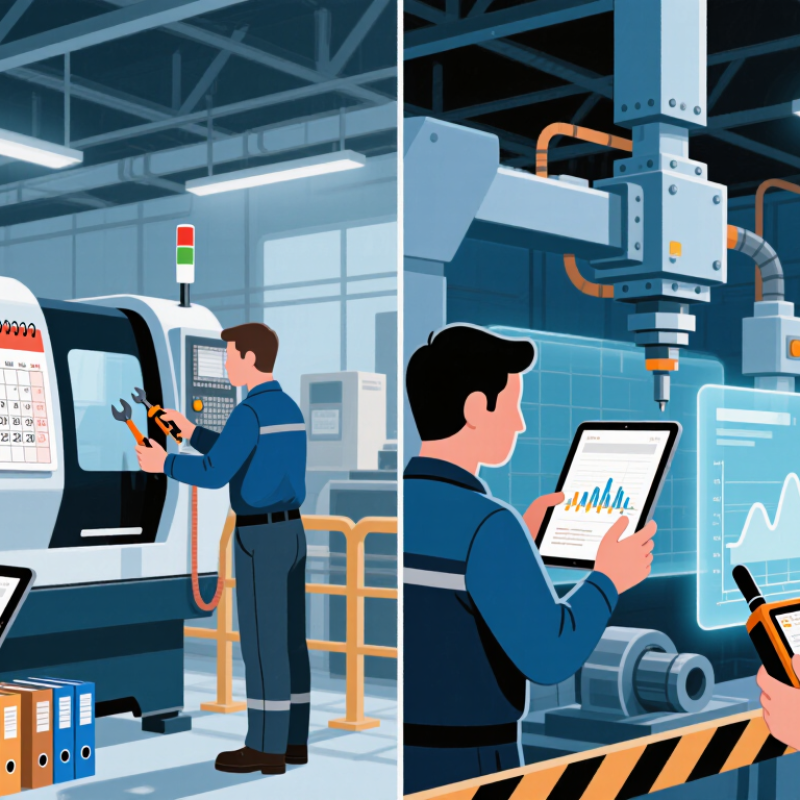
Preventive maintenance means servicing equipment before a known failure is likely. Teams follow time, usage, or condition-based schedules. A technician may replace a conveyor bearing every 12 months, even when it sounds normal. This approach reduces surprises and supports safer planning. It works well when failure patterns remain stable. However, fixed intervals can waste healthy parts. They may also miss defects that develop between inspections.
Predictive maintenance uses measured evidence to estimate when failure may occur. Sensors can track vibration, temperature, pressure, or lubricant particles. A rising vibration trend may reveal bearing damage weeks before production stops. Technicians can then inspect the asset and plan the repair around operating demands. The method requires clean data, trained staff, and sensible alert limits. Bad readings create false alarms. That gets expensive.
Neither method is perfect. A practical maintenance program often combines both. Critical pumps may receive continuous monitoring, while simple guards receive scheduled inspections. Maintenance records should include readings, repair causes, replaced parts, and operating conditions. These details improve future decisions. Still, teams sometimes trust dashboards too quickly. A sensor cannot explain every unusual sound or process change. Human inspection remains necessary, especially after abnormal heat, leakage, or repeated alarms. The better question is not which method wins. It is which evidence supports the safest and most reliable maintenance decision for each asset.
Preventive and predictive maintenance protect equipment through different working rhythms. Preventive maintenance follows time, usage, or manufacturer guidance. A technician may replace a pump bearing after 5,000 operating hours, even when it still appears healthy. This reduces surprise failures. Small problems stay scheduled.
Predictive maintenance waits for evidence from the equipment itself. Sensors can track vibration, temperature, pressure, oil particles, and electrical changes. A rising vibration pattern may reveal bearing wear before noise becomes obvious. Technicians compare current readings with historical baselines. They then inspect the asset and plan repairs around production needs. Data must support decisions, not decorate a dashboard.
In practice, a strong maintenance program often combines both methods. Critical equipment may receive continuous condition checks, while simpler assets follow fixed service intervals. For example, a conveyor motor could receive monthly visual inspections and vibration testing after unusual loading. This approach uses time, experience, and measurable evidence together. Still, predictions are not perfect. A loose sensor can create false warnings. A quiet failure can escape detection. Teams should verify alerts with physical inspections, clear records, and trained judgment. That honesty matters.
2026 Best Preventive vs Predictive Maintenance Guide
Preventive maintenance follows a calendar. Technicians replace filters, lubricate bearings, and inspect belts at fixed intervals. This approach suits equipment with predictable wear patterns. It also works well when a sudden failure could stop production. A maintenance log, torque wrench, and inspection checklist often provide enough control. The weakness is timing. Parts may be replaced too early, wasting money and labor.
Predictive maintenance follows equipment condition instead. Sensors track vibration, temperature, pressure, or oil particles during operation. A rising vibration trend may reveal bearing damage weeks before failure. Thermal images can expose a loose electrical connection behind a quiet panel. Maintenance teams then plan repairs around actual risk. This reduces unnecessary work, but it requires accurate data, trained staff, and clear alarm limits. Sensors can drift. Algorithms can also misread unusual operating conditions.
Neither method is perfect.
In practice, experienced teams often combine both strategies. They schedule safety inspections while using condition data for critical machines. For example, a monthly visual check may support continuous monitoring on a high-speed pump. I have seen teams trust dashboards too quickly and overlook a technician’s simple sound check. That is a costly lesson. Predictive alerts need human verification, maintenance history, and documented evidence before action. Smaller facilities may begin with manual readings and focused inspections, then expand monitoring as their data quality improves.
| Comparison Dimension | Preventive Maintenance | Predictive Maintenance |
|---|---|---|
| Core Definition | Maintenance performed at predetermined intervals or according to prescribed usage limits, regardless of the asset’s current condition. | Maintenance planned according to the asset’s measured condition, operating trends, and evidence of developing failure. |
| Primary Trigger | Calendar time, operating hours, production cycles, mileage, or manufacturer-recommended intervals. | A condition indicator, abnormal trend, alarm threshold, diagnostic result, or estimated remaining useful life. |
| Typical Work Examples | Scheduled lubrication, filter replacement, belt replacement, inspection, calibration, tightening, and periodic overhaul. | Vibration analysis, infrared thermography, oil or lubricant analysis, motor-current analysis, ultrasonic inspection, and trend-based diagnostics. |
| Required Data | Asset history, manufacturer guidance, operating hours, usage records, maintenance procedures, and safety requirements. | Reliable sensor or inspection data, operating context, historical failure records, baseline measurements, alarm limits, and analytical expertise. |
| Maintenance Timing | Usually fixed in advance, such as weekly, monthly, quarterly, or after a defined number of operating hours. | Scheduled after a measurable degradation pattern is identified and before the predicted functional failure point. |
| Main Objective | Reduce the probability of failure by servicing equipment at planned intervals. | Detect degradation early enough to optimize intervention timing, reduce unexpected failures, and avoid unnecessary routine work. |
| Failure Detection | May prevent some age-related or usage-related failures, but may not identify defects that develop between service intervals. | Can identify many detectable failure patterns before functional failure, provided the failure produces a measurable symptom. |
| Planning Certainty | High short-term scheduling certainty because work is planned in advance, although the actual need may vary. | High potential planning value once the condition trend is reliable, but early implementation may involve uncertain predictions. |
| Risk of Over-Maintenance | Relatively higher, because components may be replaced or serviced while still having useful life remaining. | Generally lower for measurable failure modes because work can be based on actual condition rather than age alone. |
| Risk of Missed Failure | A failure can occur before the next scheduled task, especially when failure progression is rapid or unrelated to service age. | A failure can still be missed when sensors are poorly installed, data quality is weak, thresholds are incorrect, or the failure mode has no observable precursor. |
| Implementation Complexity | Low to moderate; typically requires documented procedures, work orders, schedules, tools, spare parts, and trained technicians. | Moderate to high; requires measurement systems, data management, diagnostic methods, analytical skills, and a process for converting alerts into work orders. |
| Cost Profile | Usually lower initial technology cost, with recurring labor, parts, inspection, and planned downtime costs. | Usually higher initial investment for sensors, systems, training, and analysis, with potential savings from fewer unnecessary interventions and reduced unplanned downtime. |
| Downtime Pattern | Downtime is planned around the maintenance calendar, but some scheduled work may occur before it is necessary. | Downtime can be planned closer to the point of need, while abnormal conditions may be identified during normal operation. |
| Best-Suited Failure Modes | Age-related wear, usage-related deterioration, consumable replacement, statutory inspections, and tasks with known service intervals. | Failure modes that produce detectable changes in vibration, temperature, electrical behavior, lubricant condition, pressure, flow, or acoustic signals. |
| Limitations | Fixed intervals may be too frequent or too infrequent; intrusive servicing can introduce human error or installation defects. | Not every failure is predictable; inaccurate data, poor asset identification, weak workflows, and false alarms can reduce effectiveness. |
| Key Performance Indicators | Schedule compliance, planned-maintenance percentage, preventive-work completion, mean time between failures, and maintenance cost per operating hour. | Alert-to-work-order conversion, prediction accuracy, false-alarm rate, avoided failures, condition-monitoring coverage, mean time to detect, and unplanned downtime. |
| Recommended Use | Use as the foundation for routine servicing, safety-critical inspections, regulatory tasks, and assets with stable, well-understood service intervals. | Use selectively for critical, expensive, failure-prone, or continuously operating assets where condition data can support timely decisions. |
| Most Effective Strategy | A risk-based preventive program that adjusts task intervals using asset criticality, failure history, operating conditions, and safety requirements. | A targeted predictive program integrated with preventive tasks, operator inspections, root-cause analysis, and a disciplined maintenance planning process. |
Note: Preventive and predictive maintenance are complementary strategies. The appropriate mix depends on asset criticality, failure behavior, safety requirements, data quality, operating environment, and the cost of downtime.
Preventive and predictive maintenance solve different problems. Preventive maintenance follows time, usage, or manufacturer guidance. A technician may replace a filter every 2,000 operating hours, even when it still looks clean. This approach is simple, familiar, and easy to schedule. It reduces sudden failures for equipment with stable wear patterns. However, fixed intervals can cause unnecessary part replacement. It may also miss failures that develop between inspections.
Predictive maintenance uses condition data to estimate when performance may decline. Vibration sensors can reveal bearing damage before unusual noise becomes obvious. Thermal imaging may expose an overheated electrical connection during a routine inspection. Oil analysis can identify contamination, metal particles, or abnormal wear. These methods support better timing, fewer disruptive stoppages, and more focused labor. The limitations are real. Sensors need correct placement, reliable calibration, and skilled interpretation. Poor data can create confident but wrong decisions.
Preventive maintenance suits low-cost assets, predictable workloads, and facilities with limited monitoring resources. Predictive maintenance fits critical pumps, rotating machinery, production lines, and equipment where downtime is expensive. A blended plan often works better. Use scheduled checks for safety controls, then apply condition monitoring to high-risk components. Field experience still matters. A sensor may report normal values while an operator notices a new smell or slight pressure change. Data deserves attention, not blind trust. The uncomfortable question is whether the program measures useful risk or merely produces more reports.
Choosing the best maintenance strategy in 2026 starts with asset risk, not technology. Preventive maintenance follows fixed intervals, such as replacing a pump seal every 12 months. It is practical when failure patterns are stable and inspections are inexpensive. Predictive maintenance uses vibration, temperature, oil quality, and operating data to identify developing faults. It works best on critical equipment with measurable warning signs.
A maintenance engineer should review failure history, production impact, safety exposure, and available skills. A conveyor motor stopping for two hours may justify continuous monitoring. A low-cost fan may only need seasonal inspection. Data quality also matters. Dirty sensors, missing work orders, and inconsistent readings can create false alarms. No model is flawless.
A blended strategy often performs better. Use preventive tasks for simple, predictable components, then apply predictive checks to high-value assets. Set clear thresholds, record every intervention, and compare predicted failures with actual findings. A monthly review can reveal whether inspections reduce downtime or merely create paperwork. The uncomfortable truth is that some teams buy advanced monitoring before fixing basic lubrication and cleaning routines. That sequence wastes money. Start with proven maintenance discipline, test predictive methods on a small asset group, and expand only when the evidence supports it.
Comparison of typical maintenance outcomes across industrial assets. Predictive maintenance uses condition data such as vibration, temperature, oil quality, and operating trends to schedule work before failure.
Preventive maintenance follows fixed time or usage intervals and is easier to implement. Predictive maintenance generally reduces unnecessary maintenance and unplanned downtime, but requires sensors, data quality, analytics, and trained personnel. In practice, a risk-based combination of both strategies is often the most effective approach.
Preventive maintenance follows a schedule based on time, usage, or operating hours. Technicians replace filters, lubricate bearings, and inspect belts at planned intervals. It is simple and easy to organize.
Predictive maintenance uses equipment condition data to guide maintenance decisions. Sensors measure vibration, temperature, pressure, or oil particles. Teams repair equipment when warning signs show rising risk.
Preventive maintenance follows the calendar. Predictive maintenance follows equipment condition. One may replace a clean filter early, while the other waits for measurable evidence.
It suits low-cost assets with predictable wear patterns. A small fan may need only seasonal inspection. It also helps when sudden failure could stop production.
It fits critical pumps, rotating machinery, and production lines. A conveyor motor losing two hours may justify continuous monitoring. Vibration trends can reveal bearing damage weeks before failure.
Sensors require correct placement, calibration, and regular review. Algorithms can misread unusual operating conditions. Poor data may create confident but wrong decisions.
Yes. A monthly visual inspection can support continuous monitoring on a high-speed pump. Use scheduled safety checks, then apply condition monitoring to high-risk components.
Review failure history, production impact, safety exposure, equipment value, and staff skills. A low-cost fan may need simple inspections. A critical motor may need sensors.
Start with manual readings and focused inspections. Improve lubrication, cleaning, and work-order records before buying advanced monitoring. Start small. Expand only when evidence supports it.
Compare alerts with maintenance history, technician observations, and physical findings. A new smell or slight pressure change may matter. Dashboards are useful, but not infallible.
This guide explains what preventive and predictive maintenance mean and how each strategy supports reliable equipment performance in 2026. Preventive maintenance uses scheduled inspections, servicing, and part replacements to reduce the likelihood of failure before it occurs. Predictive maintenance uses condition data, sensor readings, and performance trends to identify early signs of deterioration and determine when maintenance is actually needed. Understanding what is the difference between preventive and predictive maintenance helps organizations select a practical approach for their assets, workforce, and operating conditions.
The guide compares their timing, data requirements, costs, and levels of planning. Preventive maintenance is simple, predictable, and suitable for equipment with known service intervals, but it may lead to unnecessary work or early part replacement. Predictive maintenance can reduce downtime and improve resource efficiency, yet it requires reliable data, analytical skills, and suitable monitoring systems. The best strategy in 2026 may combine both methods: scheduled care for essential routine tasks and condition-based decisions for critical or high-value equipment.

Eeptron PLC